

DBMIBS 2026: Simrad NSO 4
Continuing my new product tour from the 2026 Discover Boating Miami International Boat Show, the next stop is at the Navico booth for the Simrad NSO 4 and B&G Zeus SRX. These two families of chartplotters sit atop Simrad and B&G’s lineups. They also complete each company’s transition to products based on Navico’s NEON operating system.
I’m certain that Navico had no intent of stretching the transition from their outgoing NOS operating system to NEON over four years. But, platform transitions are hard and it has been almost exactly four years since NSX was unveiled at the 2022 Miami show. Last year, Simrad and B&G debuted their NSS 4 and Zeus SR, and replaced their aging workhorses, NSS Evo 3 and Zeus 3S. The NSO 4 and Zues SRX complete the NEON lineup with the highest performance and largest screen options.
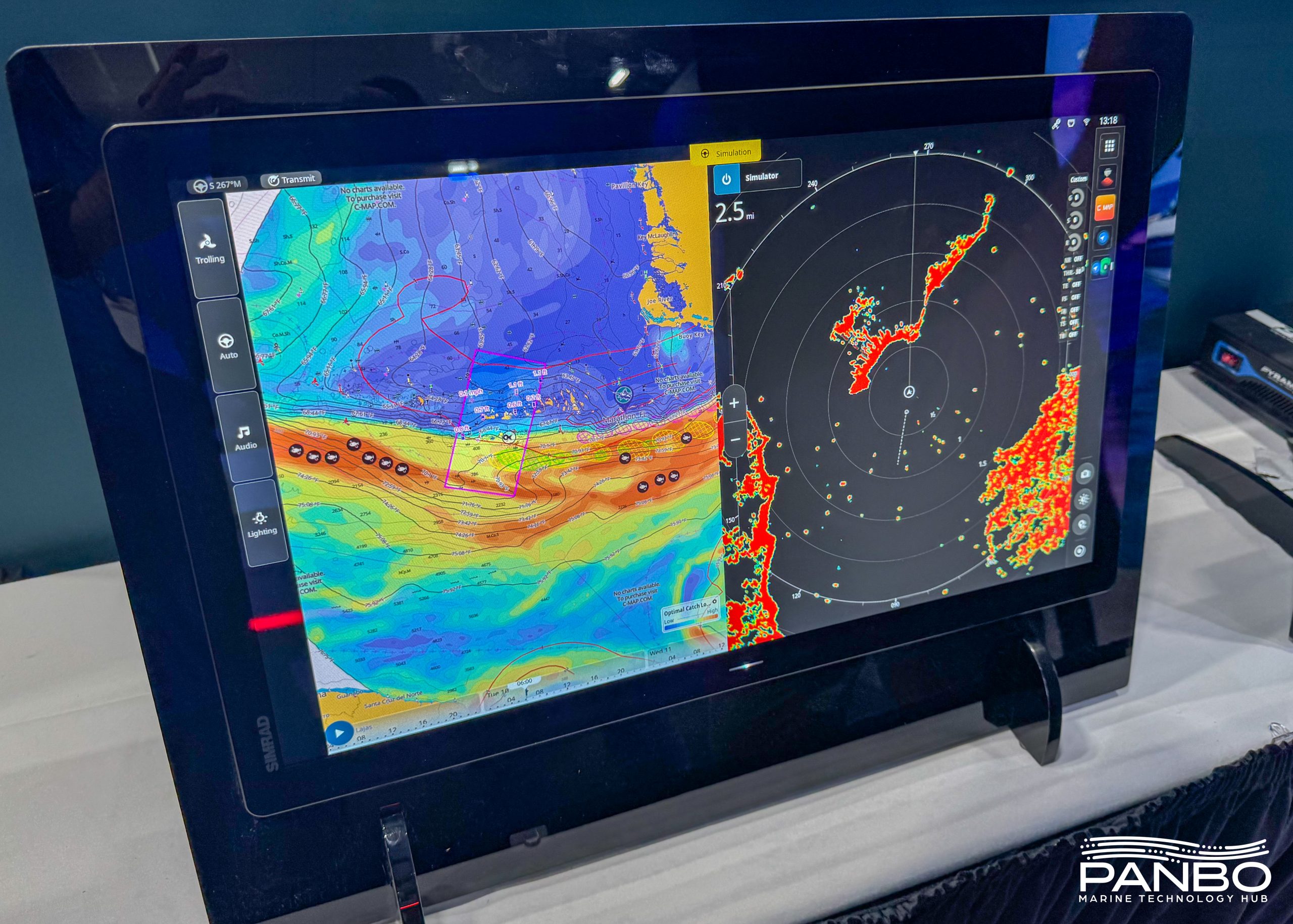
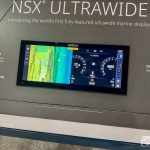
The power-boat focused Simrad NSO 4 comes in 16, 22, and 24 inch models while the sailing focused B&G Zeus SRX comes in 16 and 22 inch models. All three display sizes offer pretty narrow bezels so they occupy a little less space on a dash than you might expect.
Navico promises availability around April for these models. So, the units on the show floor are pre-production running beta software. With each new hardware platform, Navico has also tweaked the user interface to leverage the screen sizes and processing power. I spent some hands on time with the NSO 4s and like the most recent updates. I understand that these tweaks and changes will make their way to NSS and NSX models where appropriate.
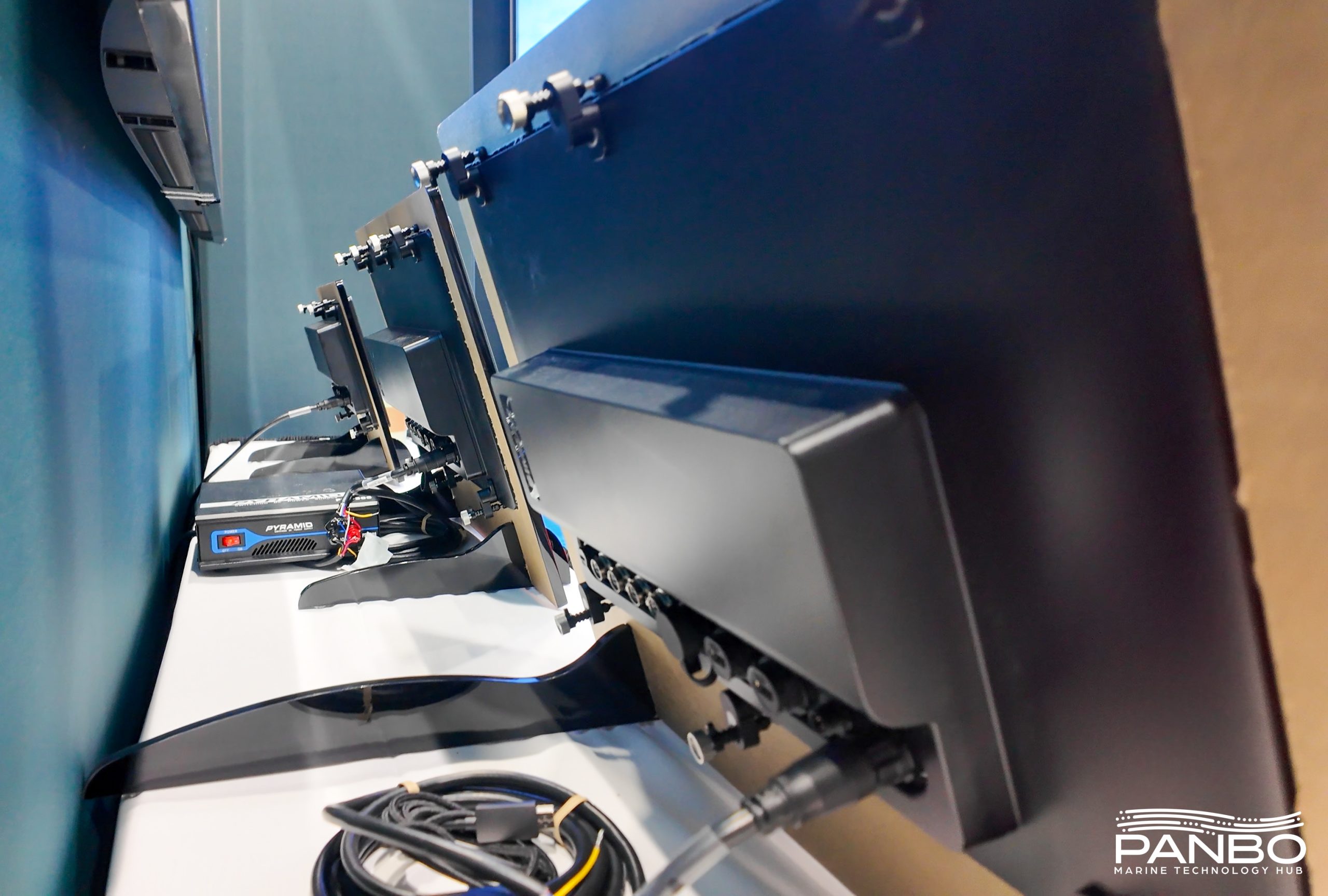
Sitting atop the model range, the NSO 4 offers 4 gigabit Ethenet ports, HDMI in and out, NMEA 2000, USB-C, and more. As is typical in range topping models, the units are not equipped with internal sonars, instead leveraging network sounders. Navico developed a clever new tool-less mounting system for these plotters. The mounts visible in the picture above turn 90 degrees to position the display and then flip out and lock the display in place.
The displays I used at the Miami show, albeit pre-production hardware and software, backed up claims of responsiveness and high performance. As marine navigation hardware product lifecycles lengthen, it is heartening that it appears these units will have plenty of power for the long haul. Navico notes both brands’ models have 8-core processors and eight times the storage of outgoing models.
One interesting note is that all displays offer full HD resolutions. So, Navico has decided not to follow Garmin’s 9000 series down a path towards 4k displays. In most use cases, that additional resolution is likely to be hard to spot, though I do appreciate the crispness of the 9000 displays when I see them.
Production units won’t start shipping for a few months. So, I won’t be able to gather more than casual impressions with demo data at a boat show. However, I am looking forward to seeing some of the user interface refinements make their way to the NSS 4 I have currently. The NSO 4 series starts at $6,499 and will be available this spring.
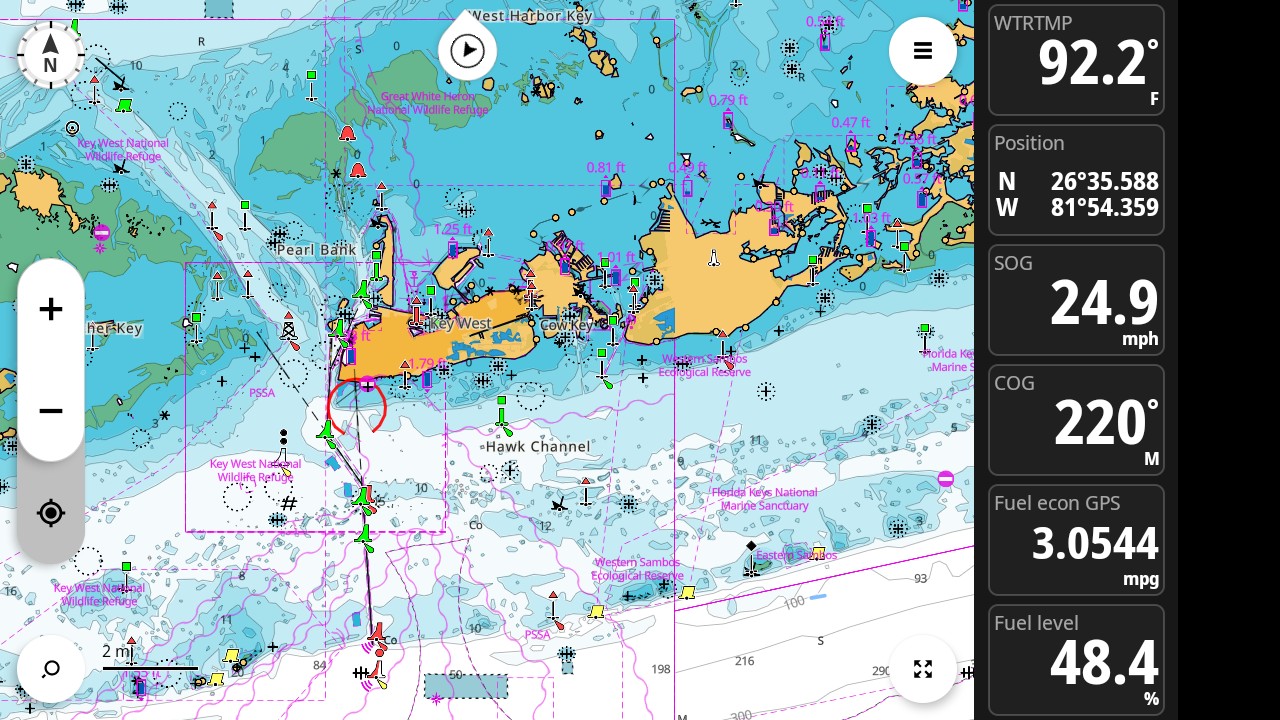


Compliments to B&G / Navico on the user interface. I played with the 12-inch B&G model at West Marine comparing to my 7″ B&G Zues 3. The UI feels familiar, but still a solid upgrade, with touch areas that are intentionally larger. At first they seemed oversized, then I imagined trying to hit them on a bouncing boat and it made perfect sense. I usually prefer a mix of physical controls and touch, but while plotting a course I didn’t feel any urge to reach for buttons the way I do on my Z3 hybrid touch UI.
For the first time, I can imagine having a touch only display without buttons and knobs.
Well done team B&G