
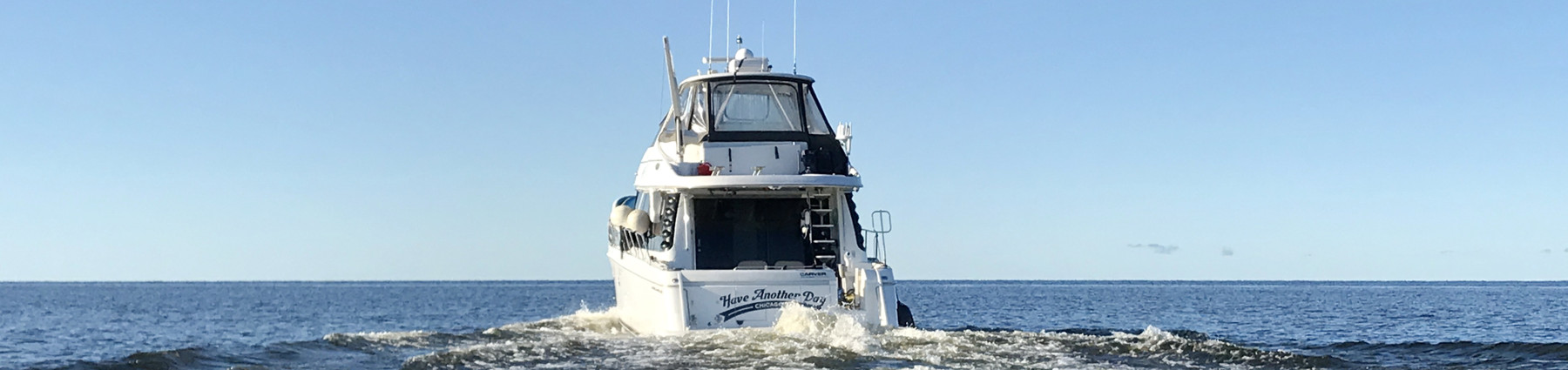
Garmin Quatix 8, compelling marine watch option now with inReach
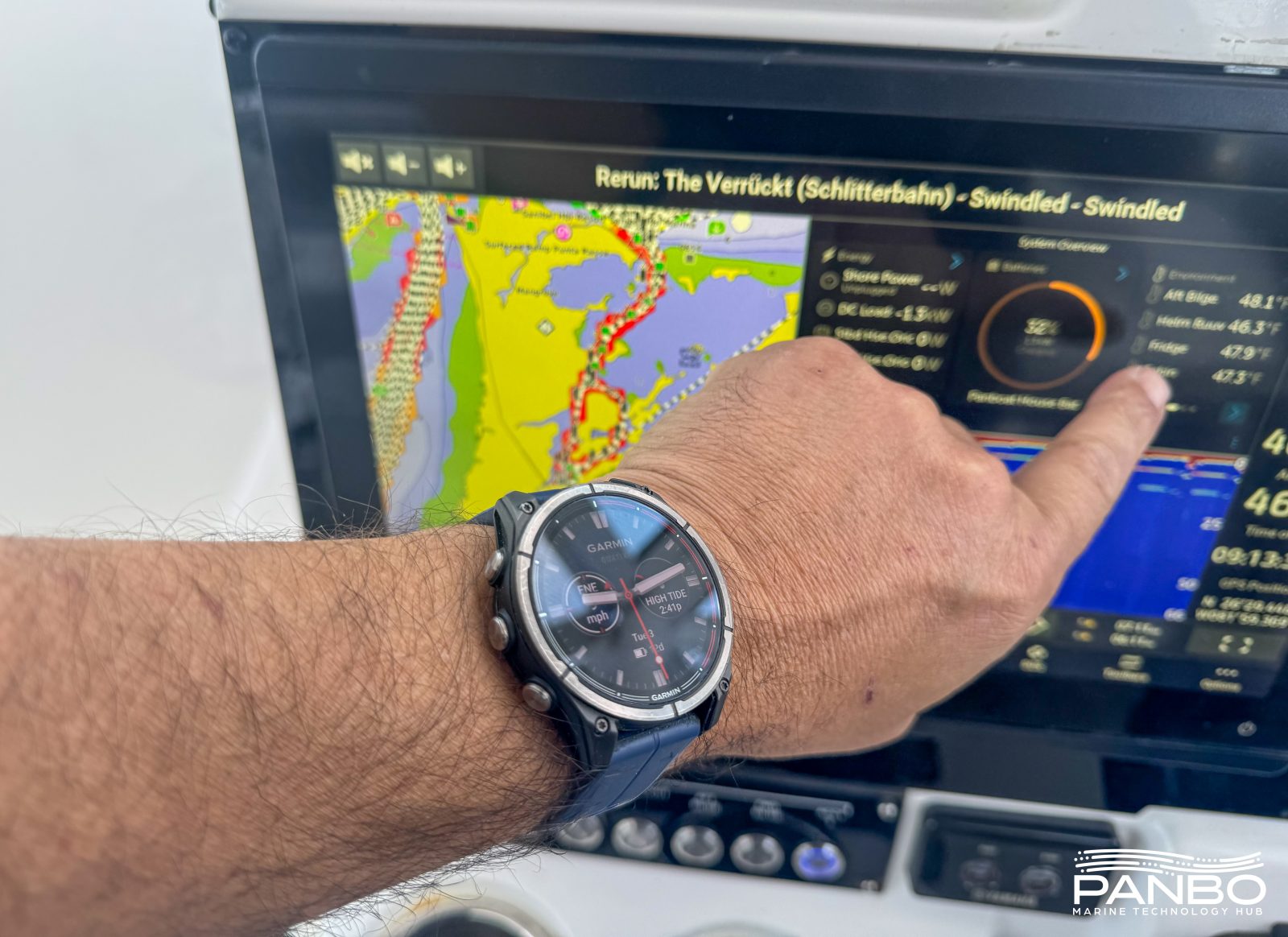
The Quatix 8 might just accomplish something no other Garmin (or any other brand) watch has done so far. Displace my Apple Watch. I am deeply invested in Apple’s ecosystem. I use an iPhone, iPad, Mac, Airpods, and Apple Watch. So, getting me to switch out one of those pieces is an uphill battle. The Quatix 8 offers enough improvements over prior Quatix watches, and my Apple Watch Ultra, to make a strong case for daily wear. If you’re like me and happy with your current wristwear, you might be wondering what the Quatix could possibly deliver to compell a change. For me, the answer comes down to four things — not all of them marine related — that weigh the scale in Garmin’s favor. Those four things are: thorough integration with Garmin navigation electronics, extremely long battery life, robust fitness features, and now, satellite communications from my wrist.
The Quatix 8 — and now the recently introduced Quatix 8 Pro with inReach functionality — is a premium, marine-focused smartwatch. The Quatix 8 is available in two sizes with 47mm and 51mm displays. As I was writing this review, Garmin introduced the Quatix Pro with inReach satellite and LTE connectivity. The 47mm Quatix 8 sells for $1,200 while either the 51mm Quatix 8 or the 47mm Quatix 8 Pro sells for $1,300. It doesn’t appear that Garmin currently offers a 51mm version of the Pro with inReach capabilities. I have to say that $100 for the step up to inReach and LTE connectivity in the pro seems like a bargain!
Like previous Quatix watches, the Quatix 8 runs the same Garmin wearable operating system as their other watches. In fact, the Quatix 8 and the fēnix 8 share most of their hardware. But, the Quatix comes with unique, marine-specific apps not available on other Garmin wearables and a full complement of radios to interface with Garmin marine equipment. Those apps include controls for Garmin chartplotters, autopilots, and Fusion stereos. Additionally, the watches display Garmin G3 charts with Navionics data, boat instrumentation data, alerts and alarms, and allow for the marking of waypoints from the watch itself.
The watch itself
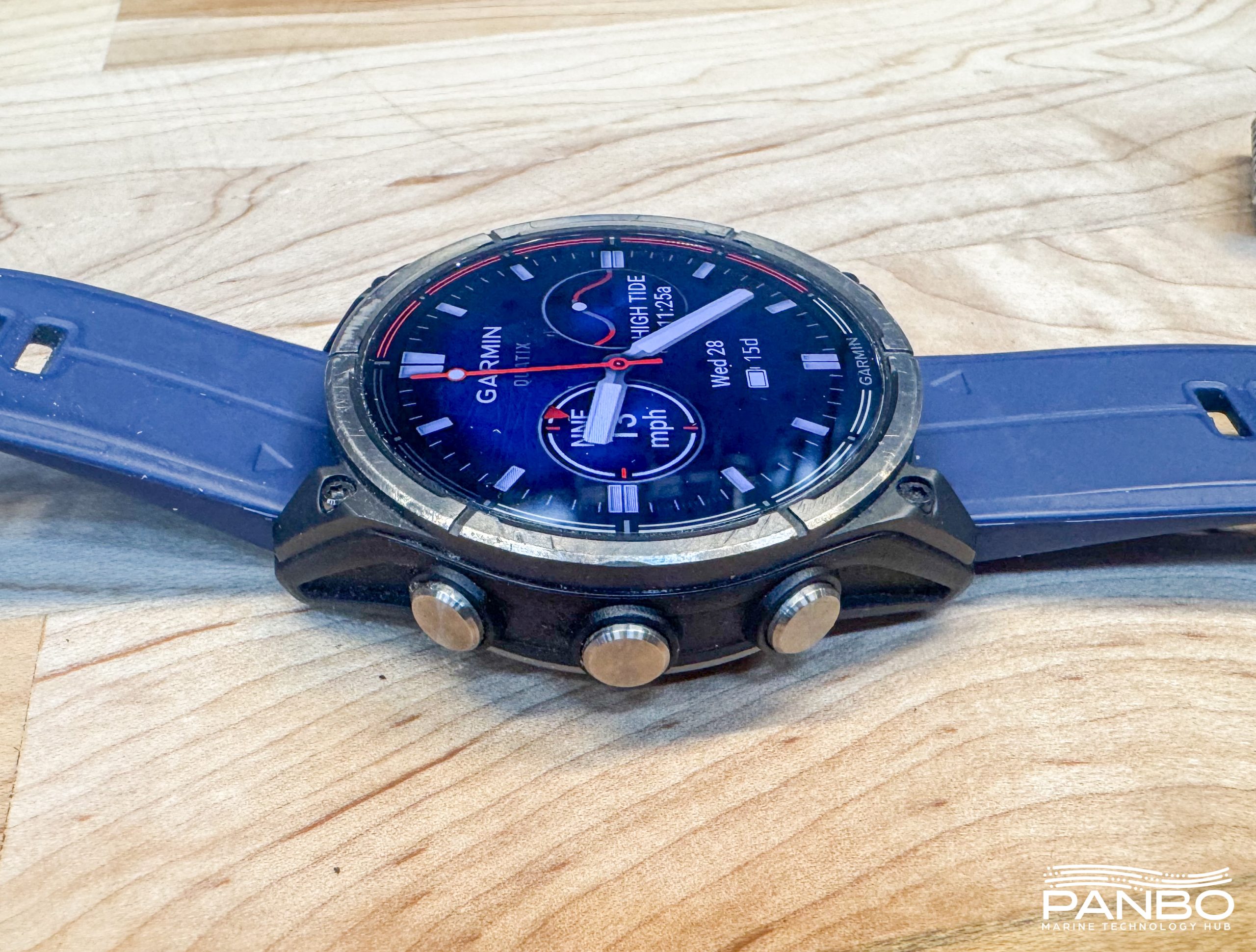
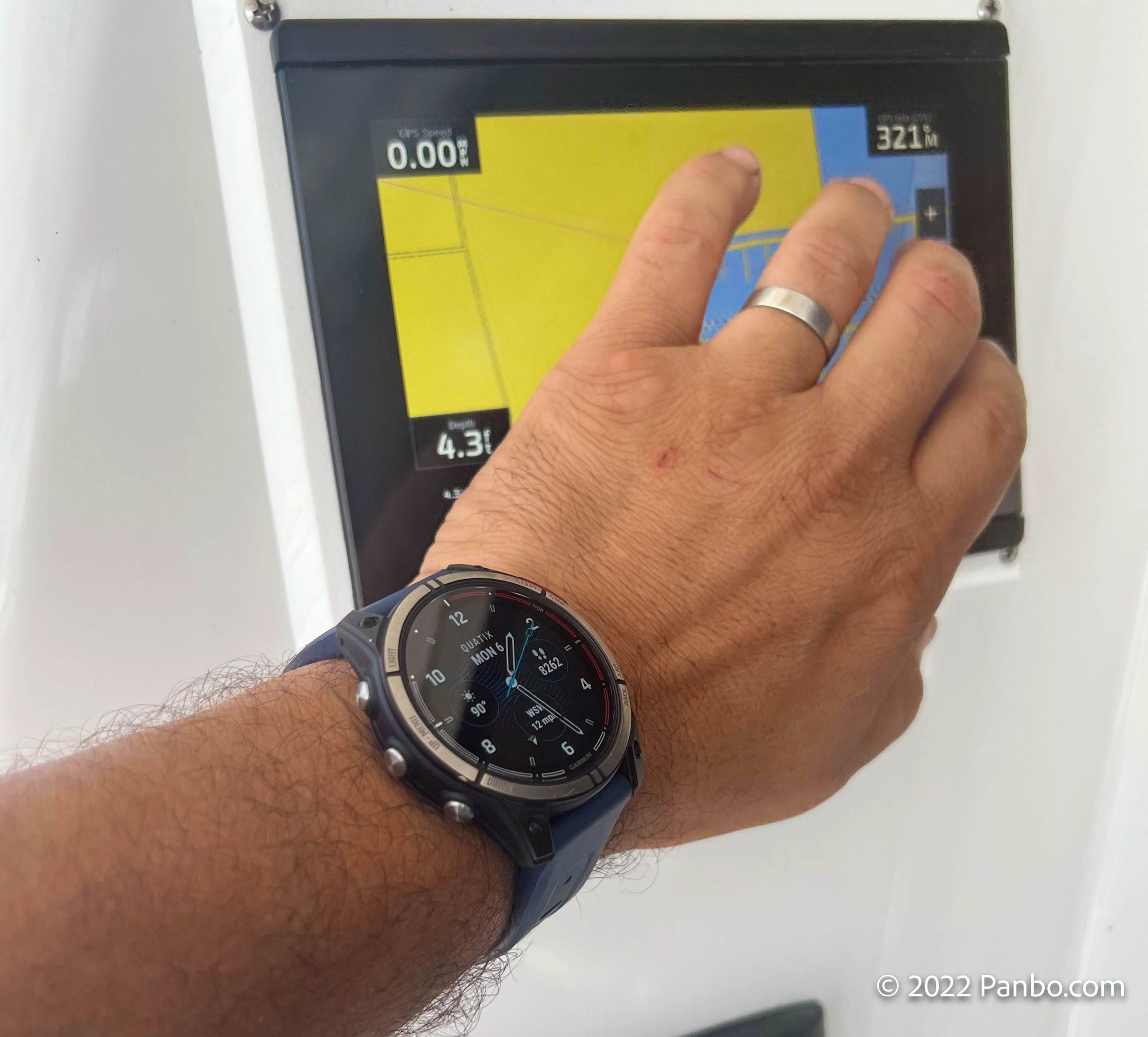
The hardware of the Quatix feels solid, though perhaps not as premium as my Apple Watch Ultra. The Quatix is made from a fiber-reinforced polymer with a metal rear cover and titanium bezel. The lens is a sapphire crystal. I’m generally pretty tough on watches, but I haven’t managed to scratch the crystal. The photo above shows quite a few scratches on the watch’s titanium bezel. Interestingly, I had no idea the bezel had any scratches until I saw the photo. If I look carefully, I can see them with the naked eye, but they aren’t nearly as obvious as the photo makes them appear. The 8 comes with a navy blue silicone band that has held up decently, though after wearing it for several months, does show some wear.
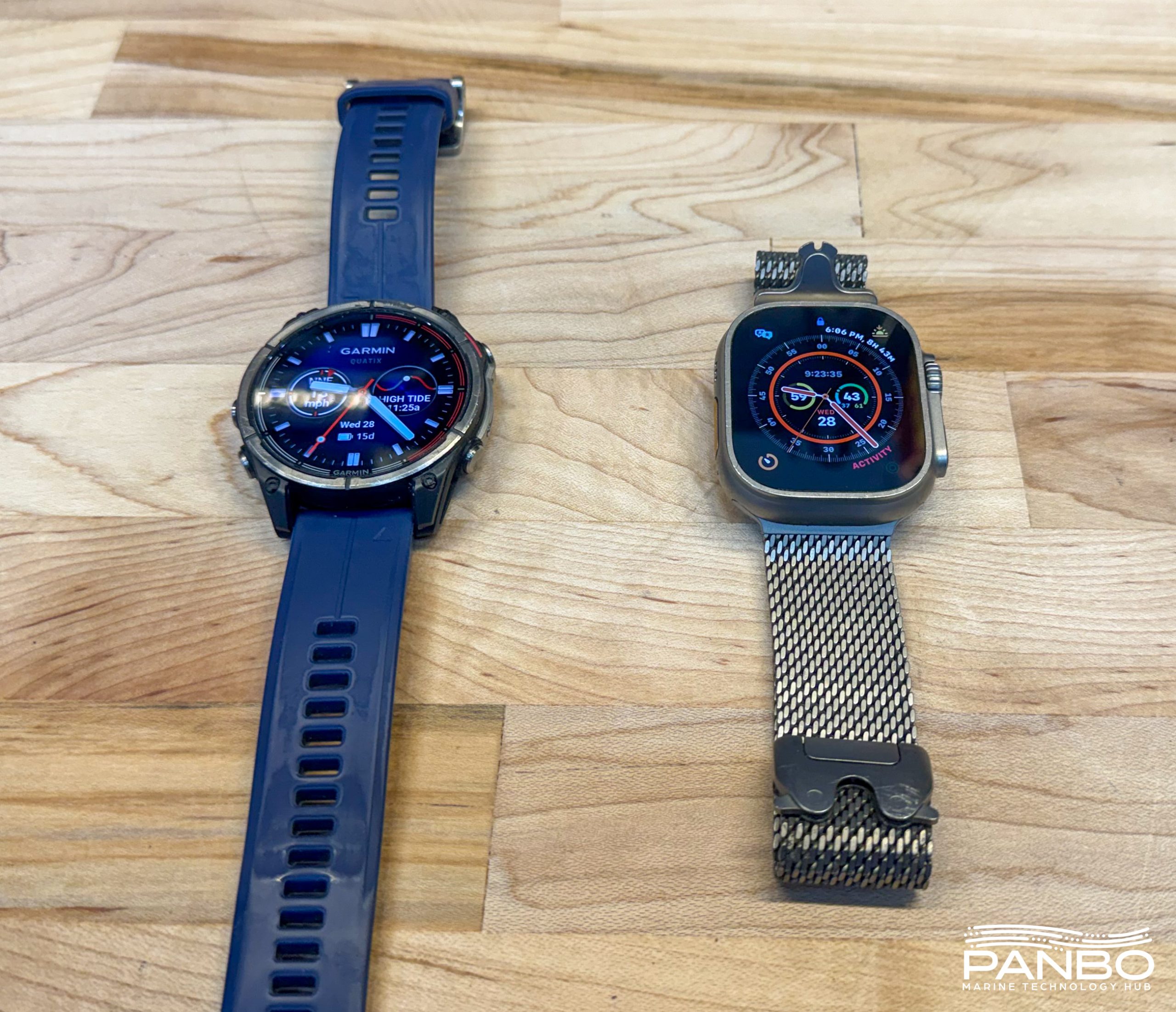
Physically comparing the Quatix 8 to my Apple Watch Ultra, there some rather obvious distinctions. First, the perfect circle of the Quatix’s face compared to the Ultra’s rounded off rectangle. Second, the Apple Watch employs an all titanium housing where the Quatix’s case is a polymer. The two watches are very similar sizes and weights. Screen resolutions are also very close. Although the Quatix’s 454 x 454 pixel resolution results in slightly more total pixels than the Apple Watch Ultra’s 410 x 502. The Quatix is 47x47x13.8mm and 52 grams without the band. The Ultra is 49x44x12mm and 61.3 grams. I don’t have a clear sense that one is better made than the other or likely to be more durable. So far, both have handled the abuse I’ve thrown at them admirably.
The Quatix 8 is 0.4 mm thinner and 5 grams heavier than the Quatix 7 it replaces. Otherwise, physical dimensions of the two watches are the same. Additionally, the Quatix 7 and 8 share the same highly impressive battery life with both watches offering up to 16 days of endurance. The watches achieve 16 day life with the display turning off when not in use. Turning on always on, drops the Quatix 8’s maximum life to 7 days. It’s worth mentioning, both of those numbers absolutely trounce the 36 hour maximum from my Apple Watch Ultra. The Quatix 8 Pro gives up one day of battery life, down to a maximum of 15, in return for the additional radios and communications abilities. Lastly, the 51mm non-pro watch delivers just shy of a full month of battery life at 29 days.
Navigation and entertainment integration
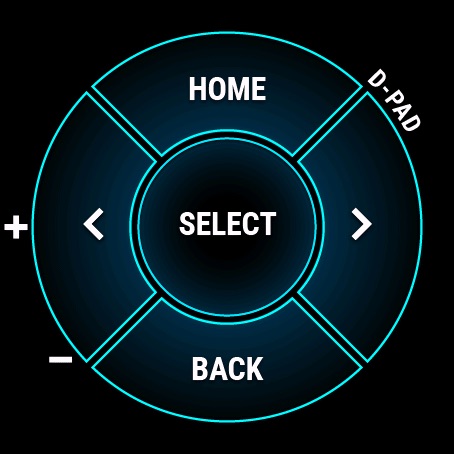
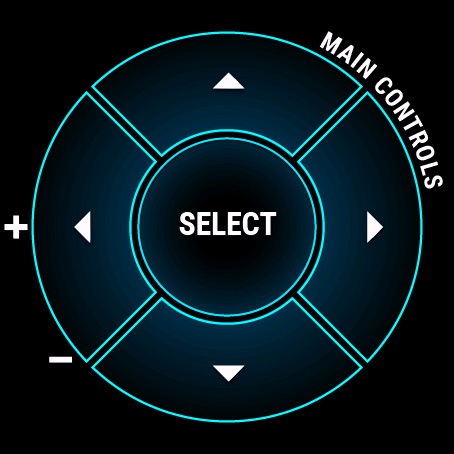
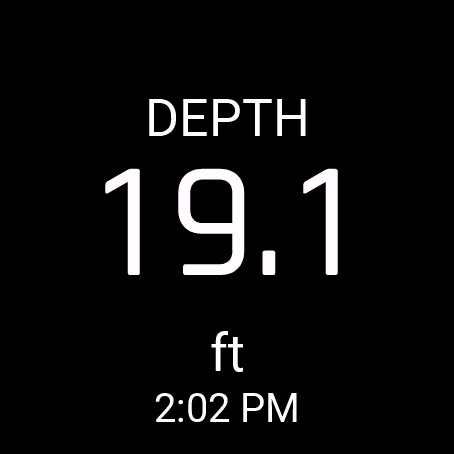
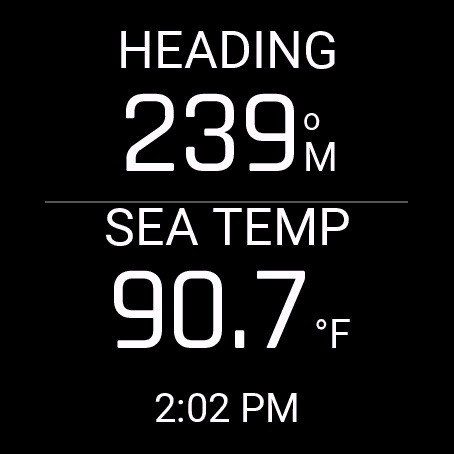
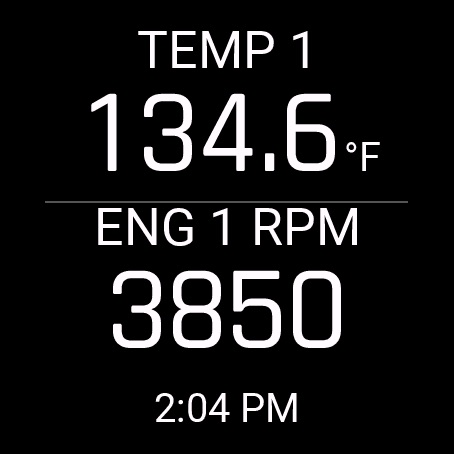
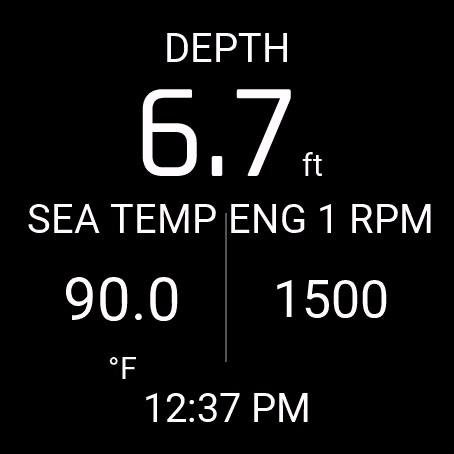
The Quatix 8 builds on Garmin’s solid integration foundation to offer comprehensive control of Garmin marine equipment installed on your boat. That control includes acting as a remote control for your MFD, autopilot, and Garmin trolling motor. Additionally, the watch can be used as a remote display for an extensive collection of NMEA 2000 data, relayed by the MFD. The Quatix 8, like the 7 before it, makes for a very useful secondary control.
The MFD remote operates much like a GRID 20 hardware remote providing a directional pad, menu control, and zoom controls. In rough waters, I have found it easier to use the watch, stabilized on my left wrist, than to use the touch screen on the MFD itself. Plus, sometimes you’re comfortably seated and don’t want to stand or reach for the MFD. To be fair, we are definitely solving first world problems.
Voice control
The headline new feature with the Quatix 8 is the ability to control Garmin MFDs by voice command. Garmin calls this feature Boat Command and with the Quatix 8 moves a host of on boat related features into an operation mode called Boat Mode. Once Boat Mode is enabled, Boat Command can be accessed by pressing and holding the top right button on the watch. After a bit of a delay, the watch plays a tone to indicate readiness for commands. Once a command is spoken, the chartplotter will either perform the requested action or provide the requested information through the watch’s speaker. Garmin has published a list of currently supported commands which vary depending on what Garmin equipment is on the boat.
So far, I have only used Boat Command connected to an MFD in my lab. I have found the system is pretty picky about the timing of issuing a command. There is a pause between when pressing the shortcut key for Boat Command and the tone indicating the system is ready for your command. But, the timeout before the watch stops listening for commands is pretty short, so you have to be on your timing game. I suspect I might get better at the timing with more use and perhaps Garmin will tweak the timing as well.
Fusion and autopilot control
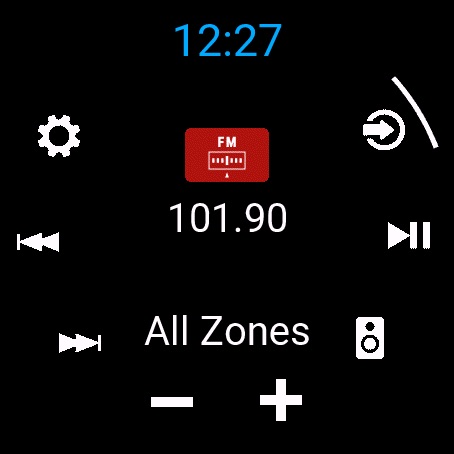
In my time on the boat, the Fusion remote app sees the most use. The convenience of using the hardware buttons on the side of the watch to nudge volume up or down, or the touchscreen to skip a song or pause the music is huge. I find it especially useful when I’ve ventured away from the helm and want to hear something being drown out by the music. Over time with Quatix watches, I have found that I don’t use the display functions as often as I might have guessed. Because I am generally at the helm and have the benefit of myriad displays, the Quatix just isn’t the first display I think to check. However, on a smaller boat, or one where the operator spends a lot of time away from the helm, like while fishing, I think the data display functions would prove extremely handy.
My Edgewater does not have a Garmin autopilot, so I have not been able to test that integration. Though, I have used it previously and find it to be a convenient additional control option. If I were to fit an autopilot to the boat, I suspect the autopilot remote might become my most used marine integration app.
Health and Fitness features
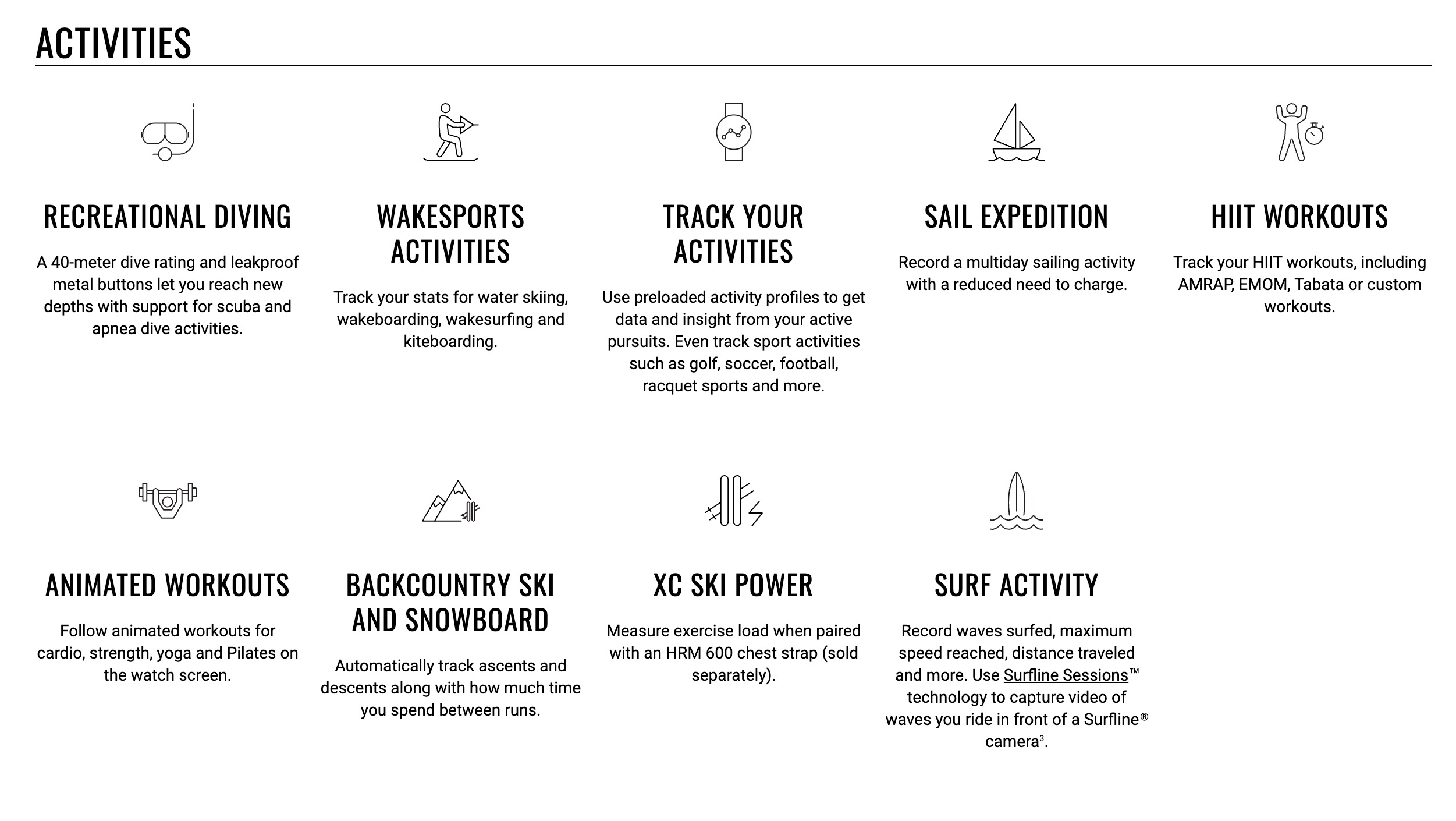
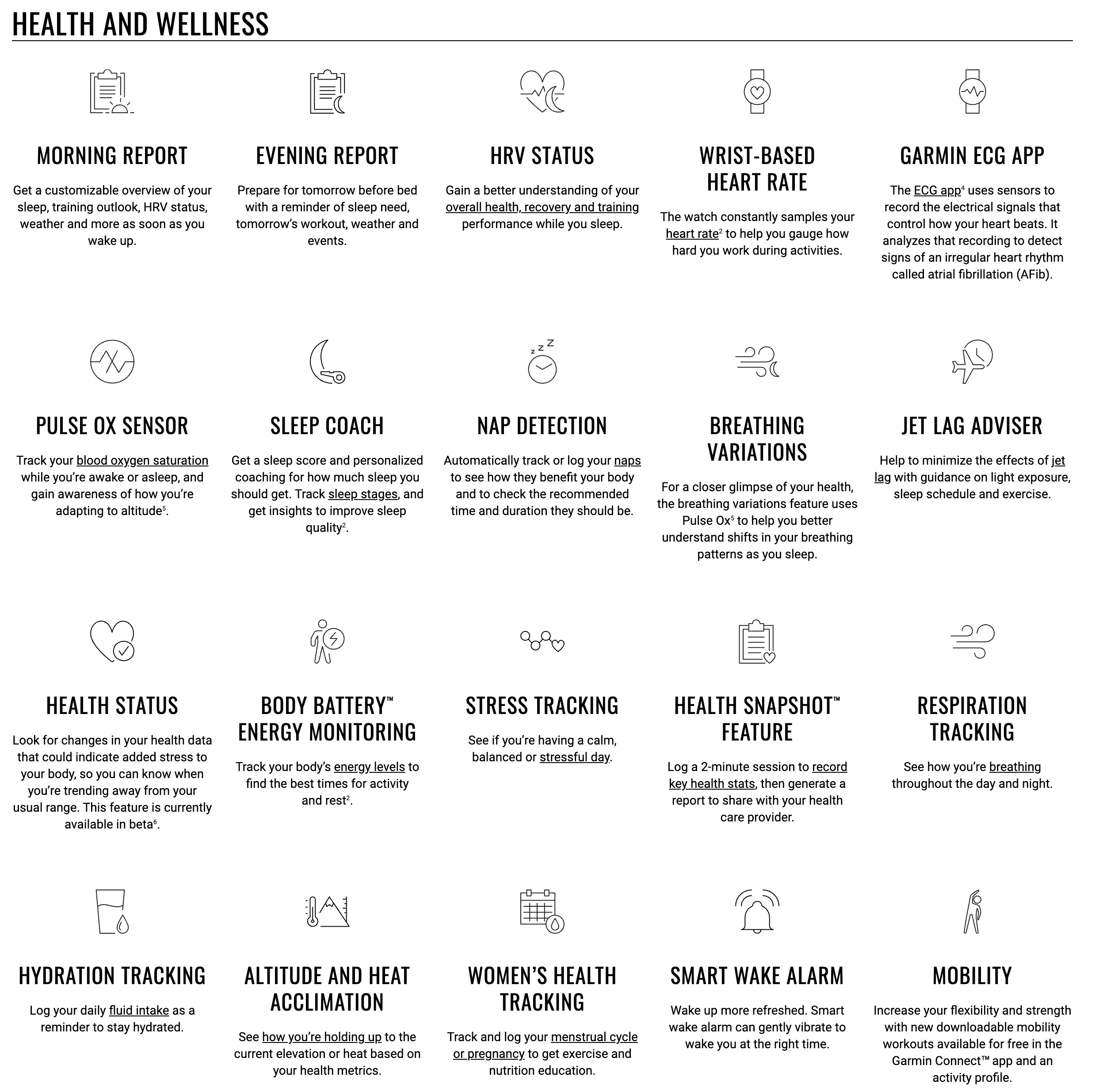
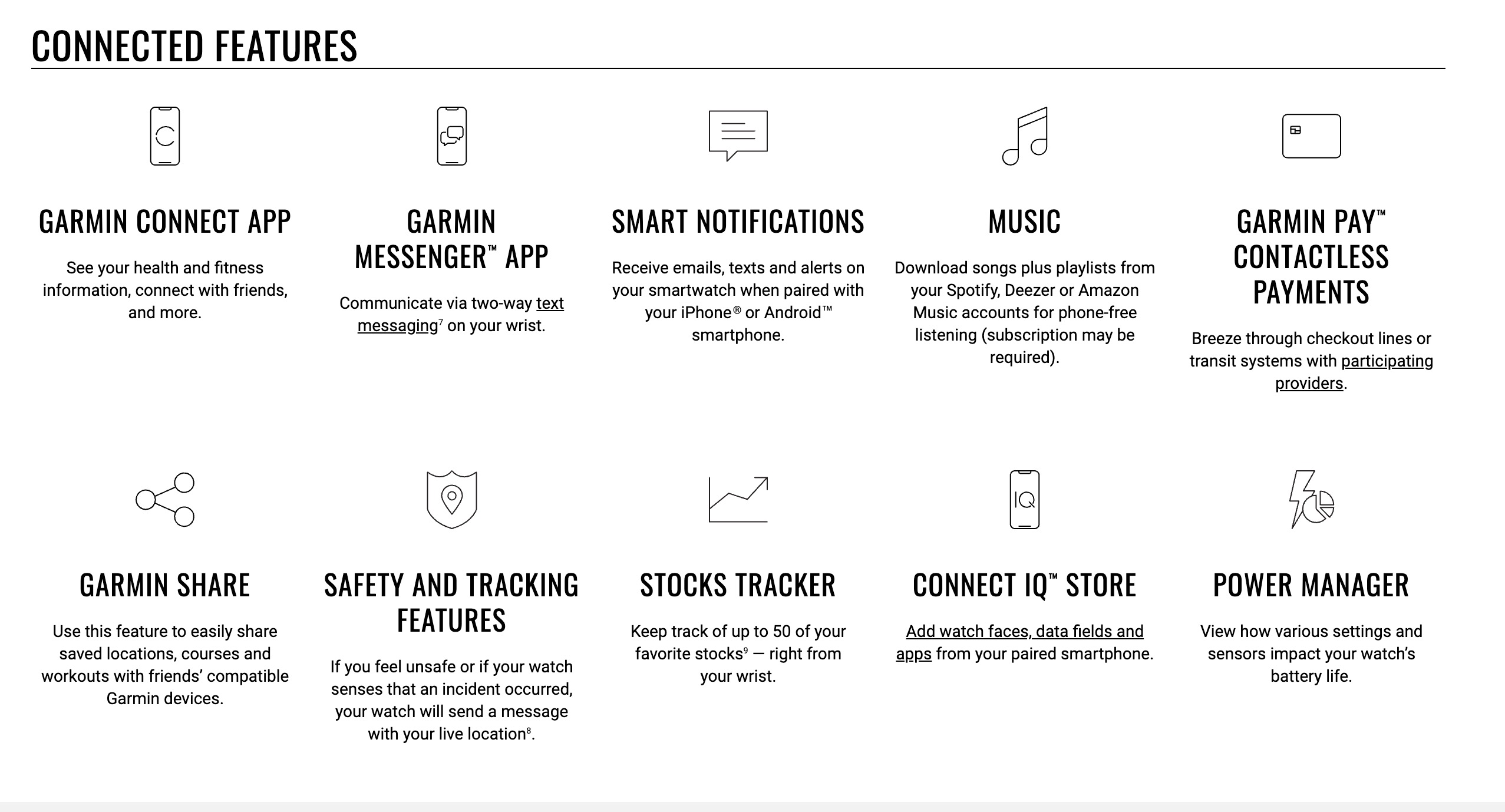
In addition to the marine-focused features, the Quatix 8 benefits from the ability to track a plethora of activities and offers the most in-depth fitness and health features I’ve experienced in any watch. Prior to beginning this review, I wore an Apple Watch Ultra and never had any complaints about the fitness and health features of the watch. However, within a few minutes of putting on the Quatix 8 and beginning a workout, the additional depth of the features became clear. I find both the additional metrics the watch tracks and the clarity of presentation a big benefit. The Quatix has me concentrating on metrics I previously ignored.
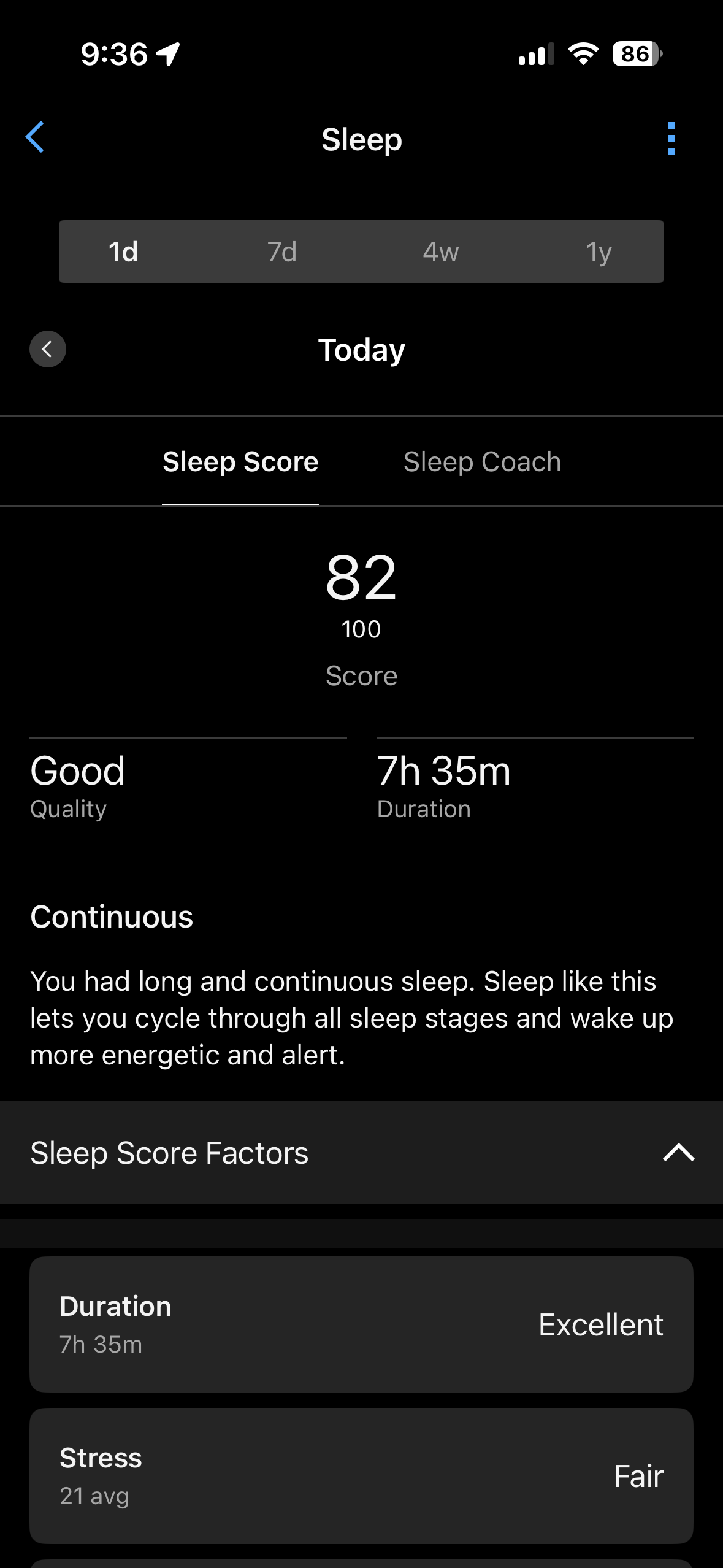
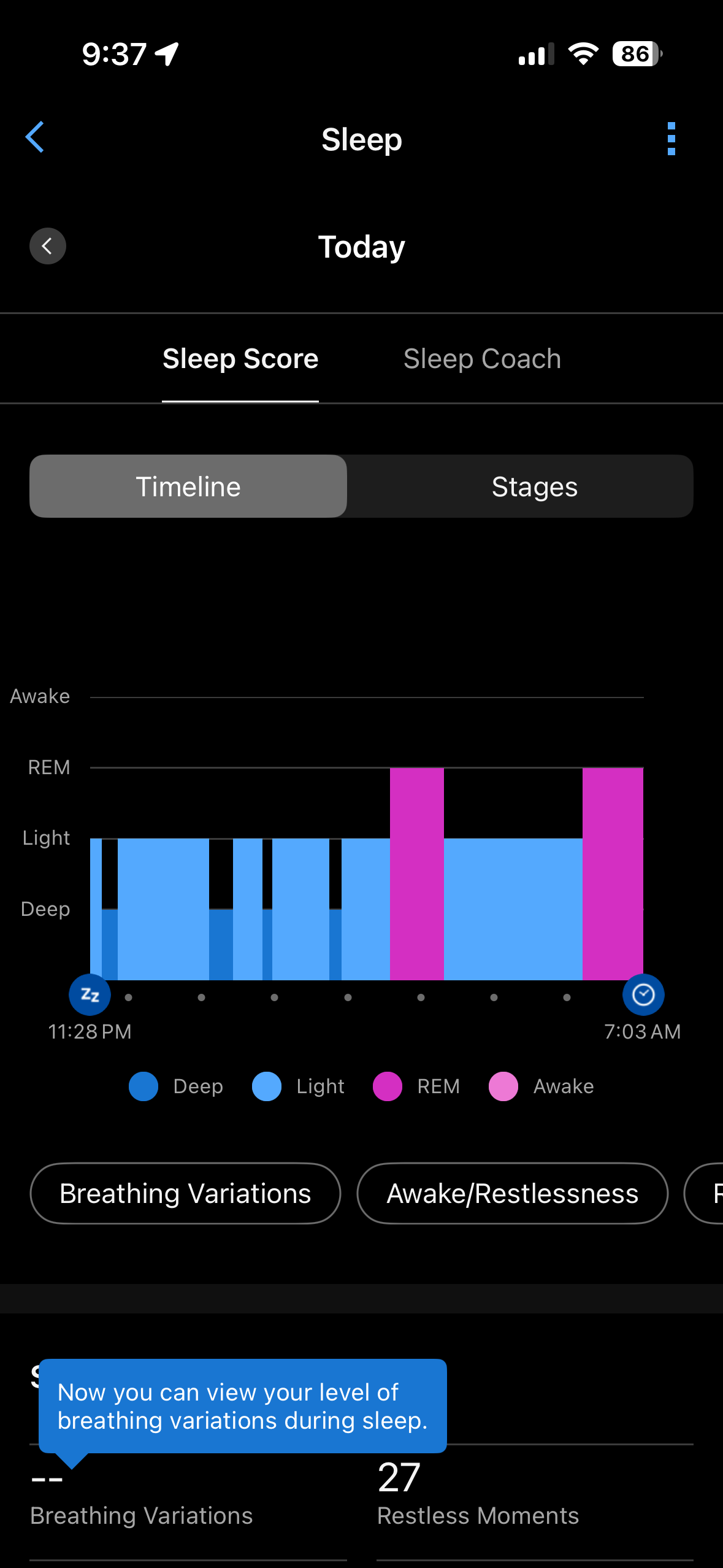
Long battery life means I can take advantage of the Quatix’s sleep tracking features. My Apple Watch needs to be charged daily and I do that while I sleep. It is possible to charge it during the day, but frankly, that’s not a process I want to manage. With either 7 days with the screen always on, or 16 days with the screen turning off automatically, the Quatix 8 makes battery management a breeze.
Quatix Pro
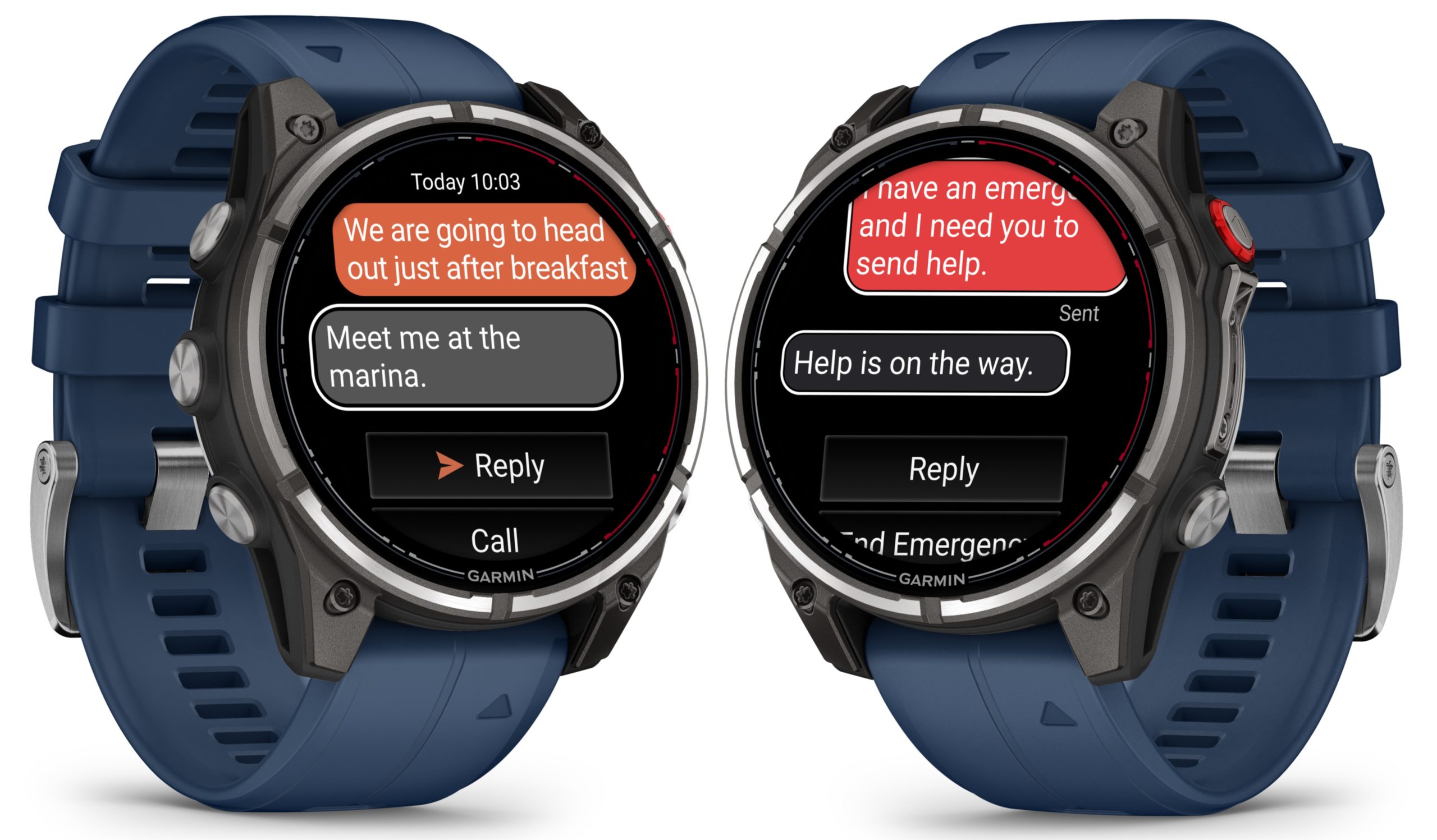
As I was writing this review, Garmin introduced the Quatix Pro I mentioned earlier. The Pro adds Garmin inReach capabilities to the watch. Quatix is the second Garmin watch with inReach capabilities behind its hardware sibling fēnix 8 Pro. Unlike traditional inReach devices, the fēnix and Quatix use Skylo’s satellite constellation. Skylo’s constellation is designed to augment a traditional cellular network not replace it. For inReach, that represents a shift in approach. Existing inReach devices don’t have LTE radios and rely solely on satellite connectivity. The fēnix and Quatix Pros rely first on the paired phone’s data connection. If that isn’t available, LTE is used next, finally if LTE is unavailable, the watch switches to satellite and the Skylo constellation.
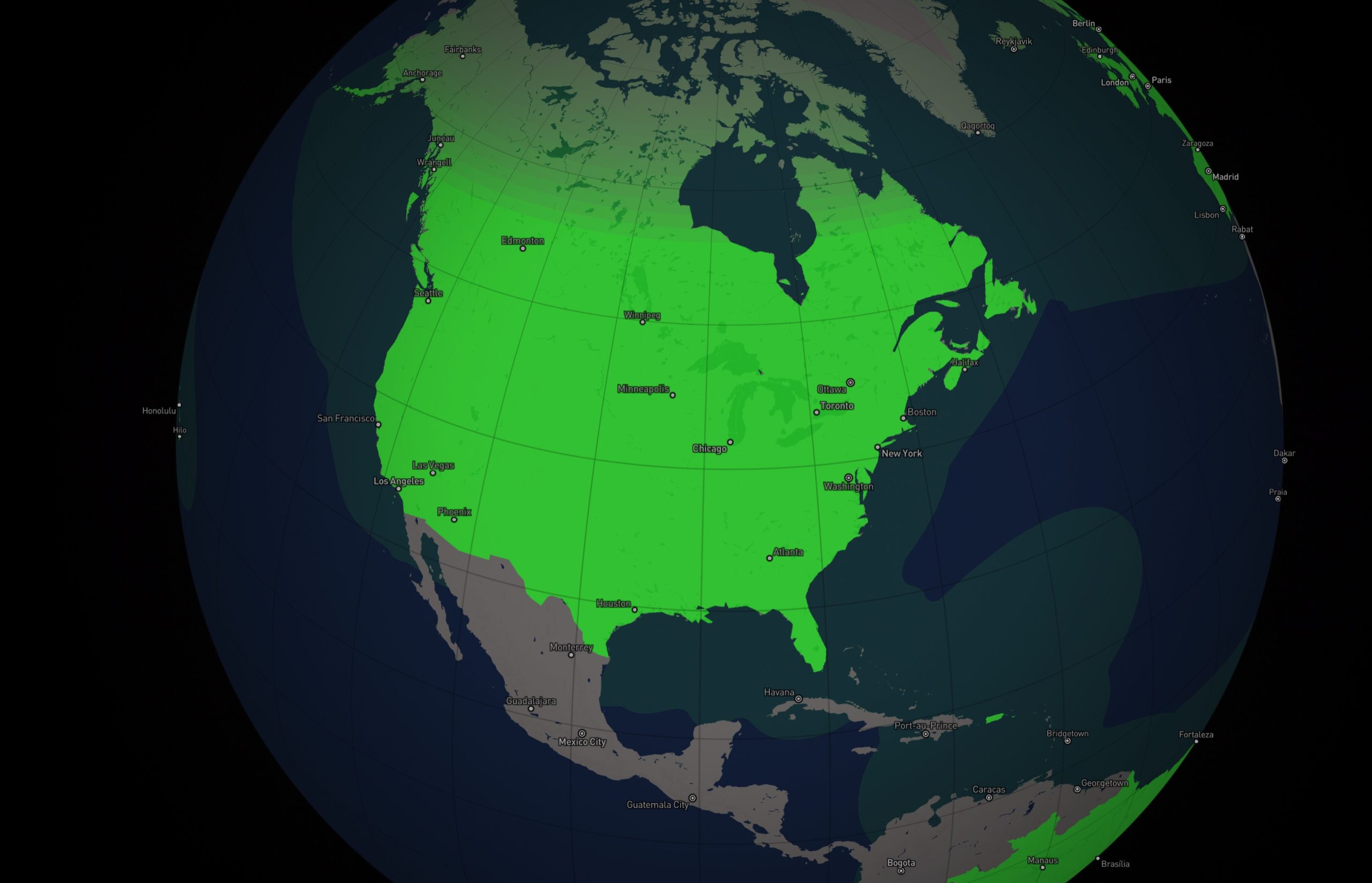
According to Skylo’s website, they currently offer coverage across 37 countries on 5 continents. That coverage is expanding but currently is currently limited to waters around North America, Europe, and some other areas of the globe. to about 50 miles offshore of the United States . That coverage is more limited than traditional inReach devices that rely on Iridium’s global constellation. For example, in North America the continental U.S. has complete coverage but the northern portions of Canada have incomplete coverage. Garmin’s watch coverage page breaks down the specifics of both LTE and Skylo coverage by country.
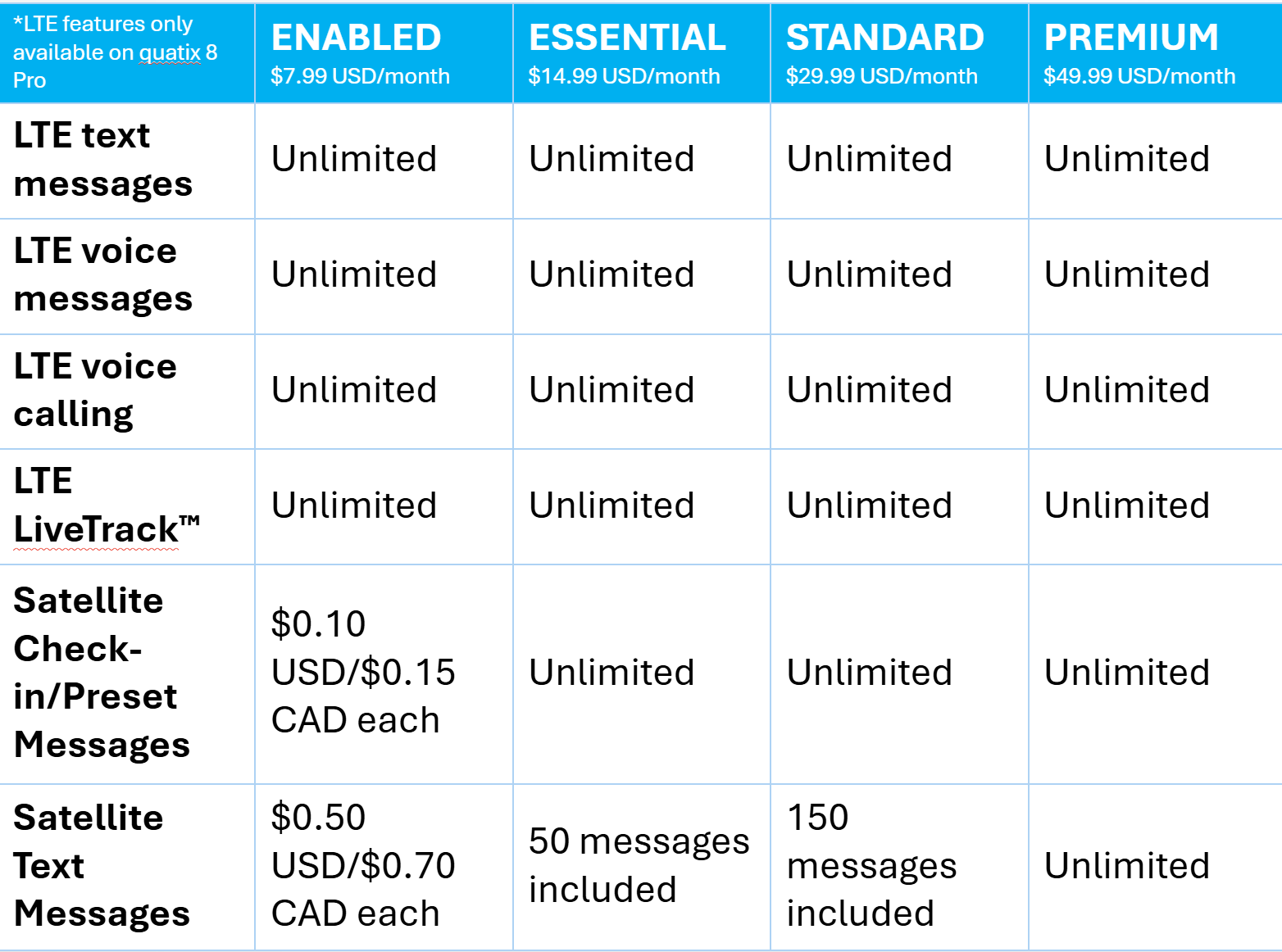
Pro watch owners can select from one of four inReach plans, Enabled ($7.99/mo), Essential ($14.99/mo), Standard ($29.99/mo), and Premium ($49.99/mo). All plans include unlimited use of all features via LTE. Plans range from no included satellite messaging to unlimited use of check-ins, texting, and tracking. The table above breaks down the coverage differences. I’m told that the handoff from cellular to satellite is very clear so there shouldn’t be any unexpected overages.
inReach messaging
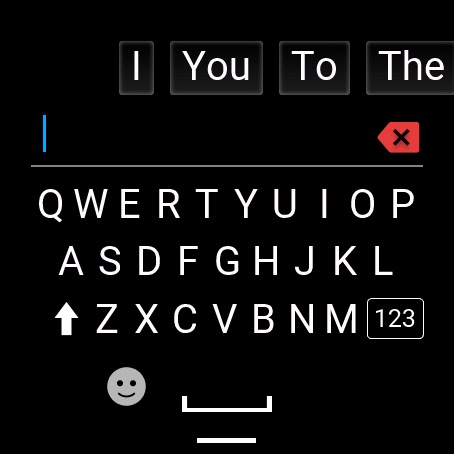
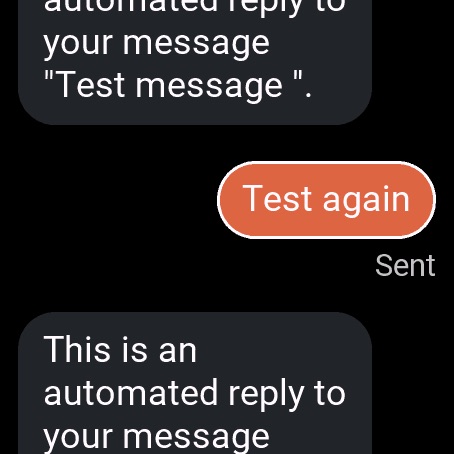
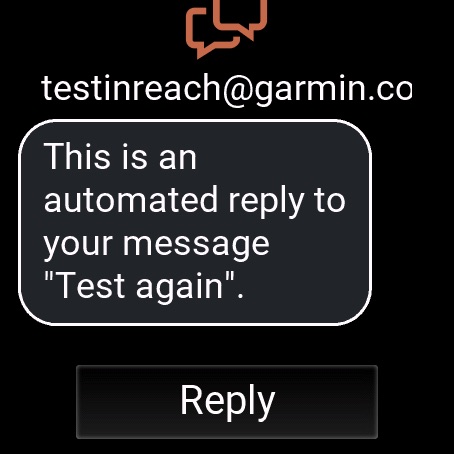
The Quatix 8 Pro puts a full inReach messenger on your wrist. You can use a phone or tablet and run Garmin Messenger to send and read messages or you can both read and compose right on the watch. Although 47mm is a nice size for a watch, it’s not an ideal size for a keyboard. So, I found composing a bit slow. However, if you are separated from your phone, in either emergency or routine circumstances, it works just fine.
Tracking on your wrist
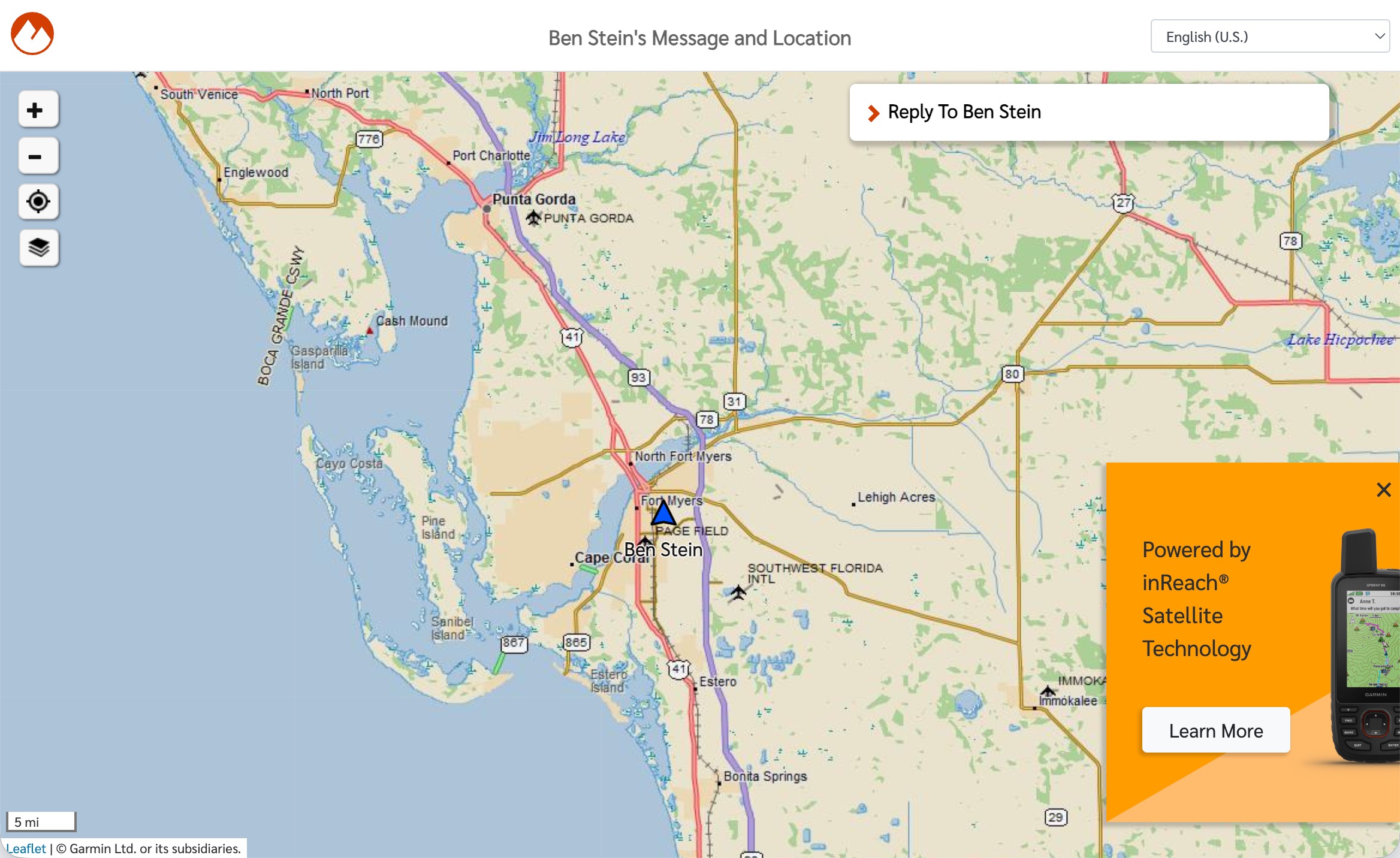
I’ve had a Quatix 8 Pro for a few days and have been experimenting with the inReach features of the watch. I have had several inReach devices over the years and never much worried about sharing location tracking. Typically, those devices have lived on a boat and I’ve never made any secret of boats’ locations. Especially with AIS, various boat monitors, and other location indicating devices. But, I have to admit that I feel a little differently about sharing the location of my wrist publicly. That’s certainly not a knock on the inReach functionality, but it is a consideration for how widely one shares their LiveTracking data.
Flashlight
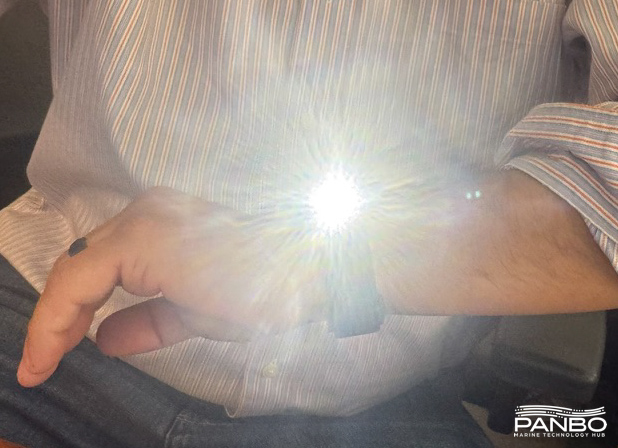
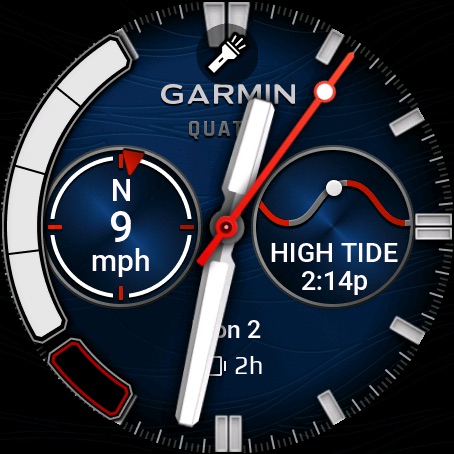
There is a lot to be said for having a flashlight on your wrist ready to go at any time. My apple watch has a flashlight mode, but let’s be honest, it’s pretty useless. The Apple Watch flashlight consists of turning the screen to full brightness and displaying all white. The Quatix 8 flashlight is a dedicated, very bright LED. Brightness is dimmable in four levels and there’s a red light option to preserve night vision. Additionally, the flashlight can be set to pulse a pattern or a distress signal.
Final thoughts
Okay, so the Quatix 8 is a series of smaller, more incremental improvements compared to the 7. So, why is the 8 the watch that changed which watch I wear? Maybe it was just taking a fresh look at a new watch. But, I don’t honestly think that’s it. I think Garmin has been close for a long time and the small additions and continuous improvements of their wearables line is enough to get me over the line and moving towards wearing the Quatix as my primary watch.
To be sure, the switch isn’t without its downsides. I really like that my apple watch will unlock both my phone and MacBook Pro. I also use an apple card and the integration of paying with my watch is seamless. Fortunately, there is Garmin Pay, but it’s another step to setup. However, the vastly superior battery life of the Quatix makes up for all the small sacrifices of straying from the Apple ecosystem. I just received a Pro a few days ago and so far I’m loving the additional connectivity. Plus, the peace of mind knowing that if I head offshore, I have a way to summon help right on my wrist.



Traded my Apple for the Garmin and wont go back. Also works well with Apple infrastructure and sends info to apple health apps etc. I really enjoy the night function Turing the watch to a red light similar to the night lights in the pilot house. Great anchor alarm on your wrist.
Nice article, powerful watch. I don’t much care for any of it — I don’t have Garmin aboard and don’t use my cell phone as an “instrument” — but that’s me and I get that others do.
But what caught my eye, and was emphasized by your last comment (“if I head offshore”), is the InReach capability. It seems it is VERY focused on inland/near coastal waters. It’s marginally useful for many fisherman, who can easily run outside the range limits of the watch for a day chasing big fish, and truly useless for sailors who might actually WANT that function for extended periods of time (we are planning a non-stop trip from Annapolis to Halifax this summer — most of that will be outside the range limits, although we’ll do the old-school “we’ll lose coverage at the Virginia Capes, we’ll call you when we reach Nova Scotia” plan). Admittedly, the vast majority of boaters will never leave the service area.
Did I read this wrong? Does it currently provide true “offshore” coverage, and I missed it? Is there an option/upcoming upgrade to be able to extend beyond the 50 mile offshore limit? Offshore coverage would certainly enhance the value of the watch. With this watch, folks doing the Salty Dog Rally, or any ocean race, or just concerned about tracking offshore would still need to buy/provision an InReach device.
Harry,
Did you check out the coverage map? It is in the article with a screen cap of North American coverage and link to their coverage page. Your example from Annapolis to Halifax looks very well covered by the current Skylo coverage footprint. They are expanding coverage so I only expect it will improve.
You correctly point out that heading offshore means different things to different people. Indeed, the Skylo constellation does not offer a global footprint today, and I’m not sure it ever will. If you’re planning on blue water, globe crossing cruising, a traditional inReach and its Iridium constellation is definitely the better fit. But, if you do your cruising within the dark green footprint of Skylo’s coverage, the Quatix is an excellent option.
-Ben S.
Ben,
No, I didn’t look at the map, I accepted the note in the article that it was limited to about 50 miles offshore. I should have looked!
I have now looked at the map, and, as you point out, coverage is FAR more than 50 miles. It looks to be more like 300-400 miles, in some places much more. It absolutely covers Annapolis to Halifax, nearly covers Chesapeake to Puerto Rico, and covers almost the entire trip from the Chesapeake to Bermuda. It also seems to cover most, if not all, of the Great Circle Route from the Chesapeake to England.
So, yes, covers a LOT of offshore.
Harry,
I should have said in the article (and will go add it) that although Garmin says it provides coverage 50 miles offshore, the coverage map shows coverage much further out. That said, it’s still not the full globe coverage of Iridium.
-Ben S.
Replying to my own reply, not a great look! Sorry, that section didn’t get the attention it should have initially. I found the coverage map after I’d written much of the article. I then realized that coverage is better than the minimum Garmin promised of 50 miles offshore. The coverage map changed my feelings about the utility of the offshore coverage, but I failed to update the sentence reporting 50 miles of coverage. I’ve done that now and hopefully this is clearer.
Harry, thanks for pointing this out.
-Ben S.
Is there a feature to broadcast NMEA-2000 information to the watch from Non-Garmin equipped boats?
Are we certain on the “Ocean Coverage” shown on Skylo’s map working on the Pro as that is not aft all what is shown on Garmin’s maps? I’ll buy it instantly if I am getting Inreach on my wrist in the Ocean Coverage areas. But its a pass if it is based on Garmin’s maps.