

DBMIBS 2026: Digital Yacht veLINK
Digital Yacht has been on a roll recently with clever, relatively simple products to solve specific needs. Well, they’ve done it again. This time, Digital Yacht has introduced a small converter that connects to Victron products via Bluetooth, convert their data, and share it on a NMEA 2000 network. The veLINK gateway solves problems on boats without a GX device and for Victron devices without wired connectivity.
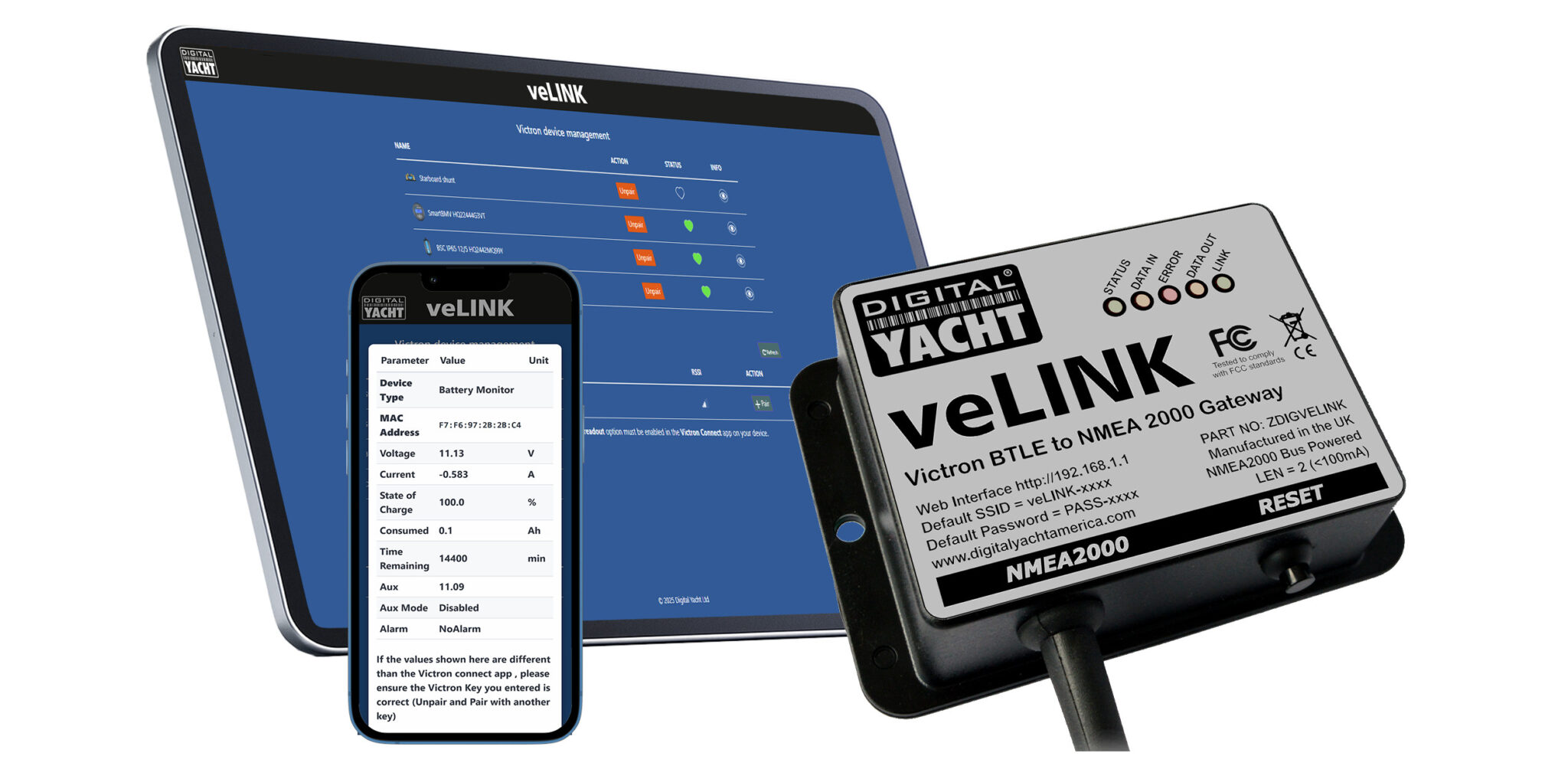
veLINK connects up to 8 Victron Bluetooth low energy (BLE) devices including battery monitors, solar controllers, AC battery chargers and DC-to-DC converters and makes their output available via NMEA 2000. Digital Yacht lists the veLink for $299 on their website, though I suspect it will be available for less via retail. By comparison, a Victron Cerbo is typically about $250.
I can see plenty of circumstances in which the full integration of a Cerbo isn’t needed. Plus, there are quite a few Victron products with BLE but without a VE.Direct port that can’t be connected to a GX device. For example, the entire line of Blue Smart chargers (IP22, IP67, and IP65) don’t have VE.Direct connectivity. Additionally, older Orion DC-DC converters also lack VE.Direct ports.
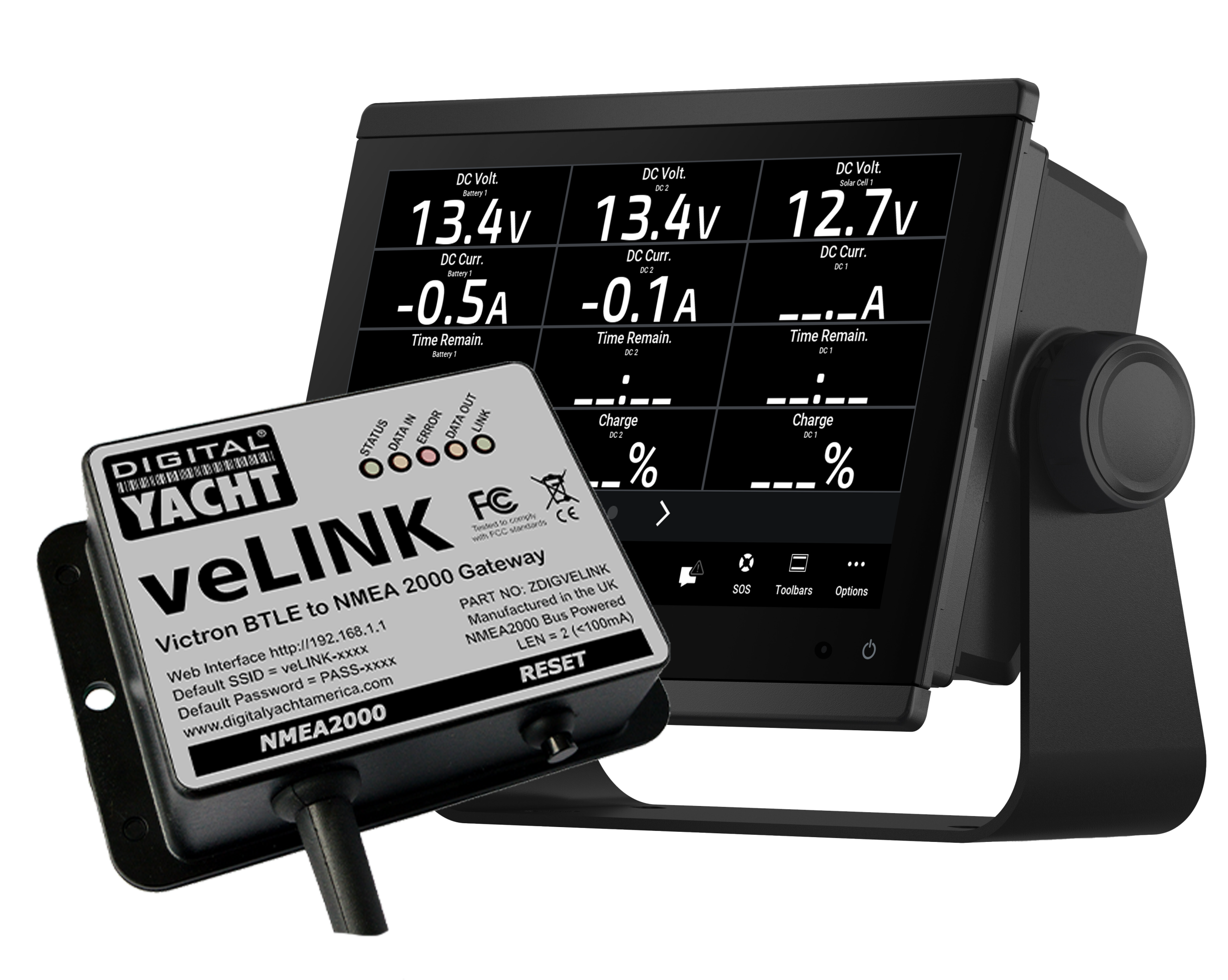
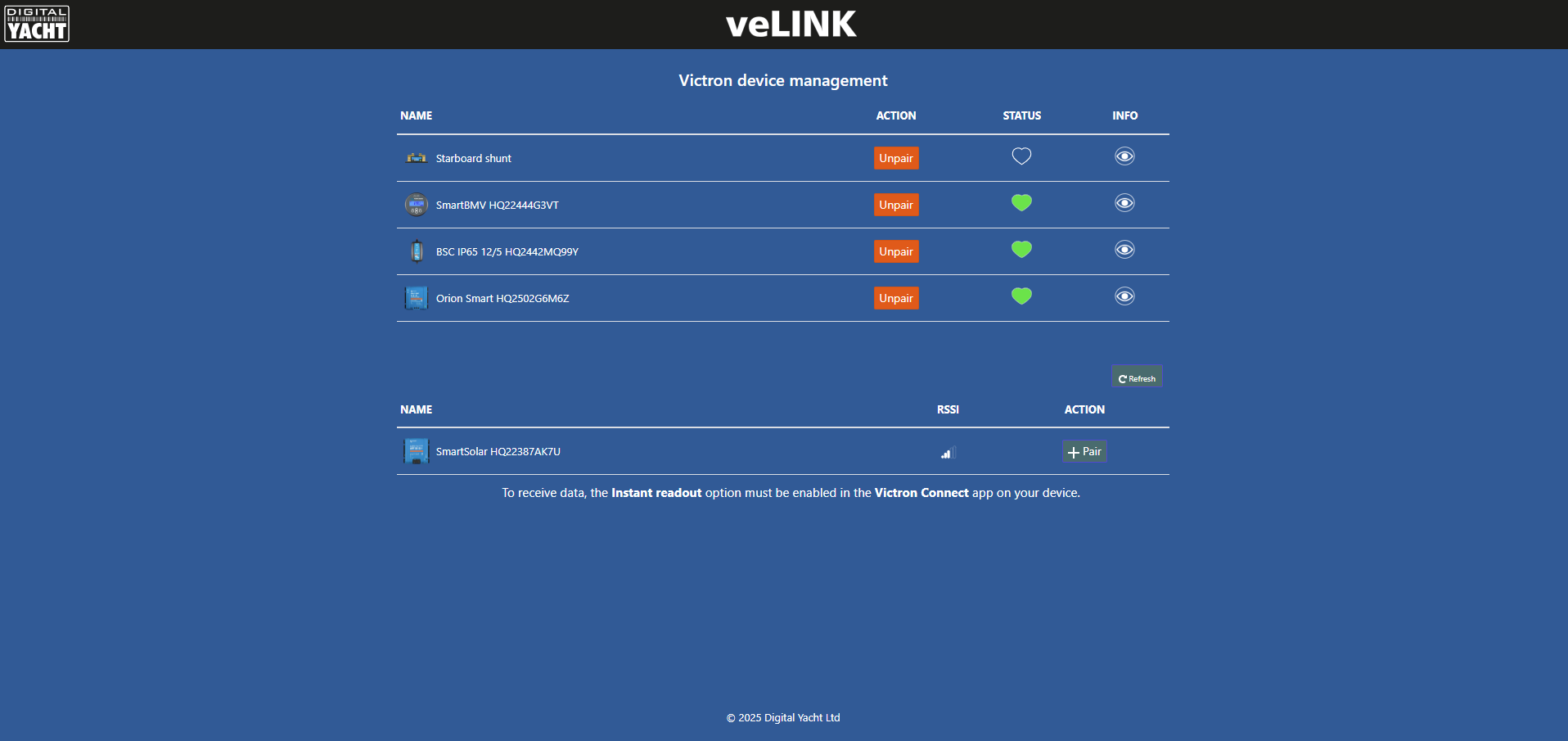
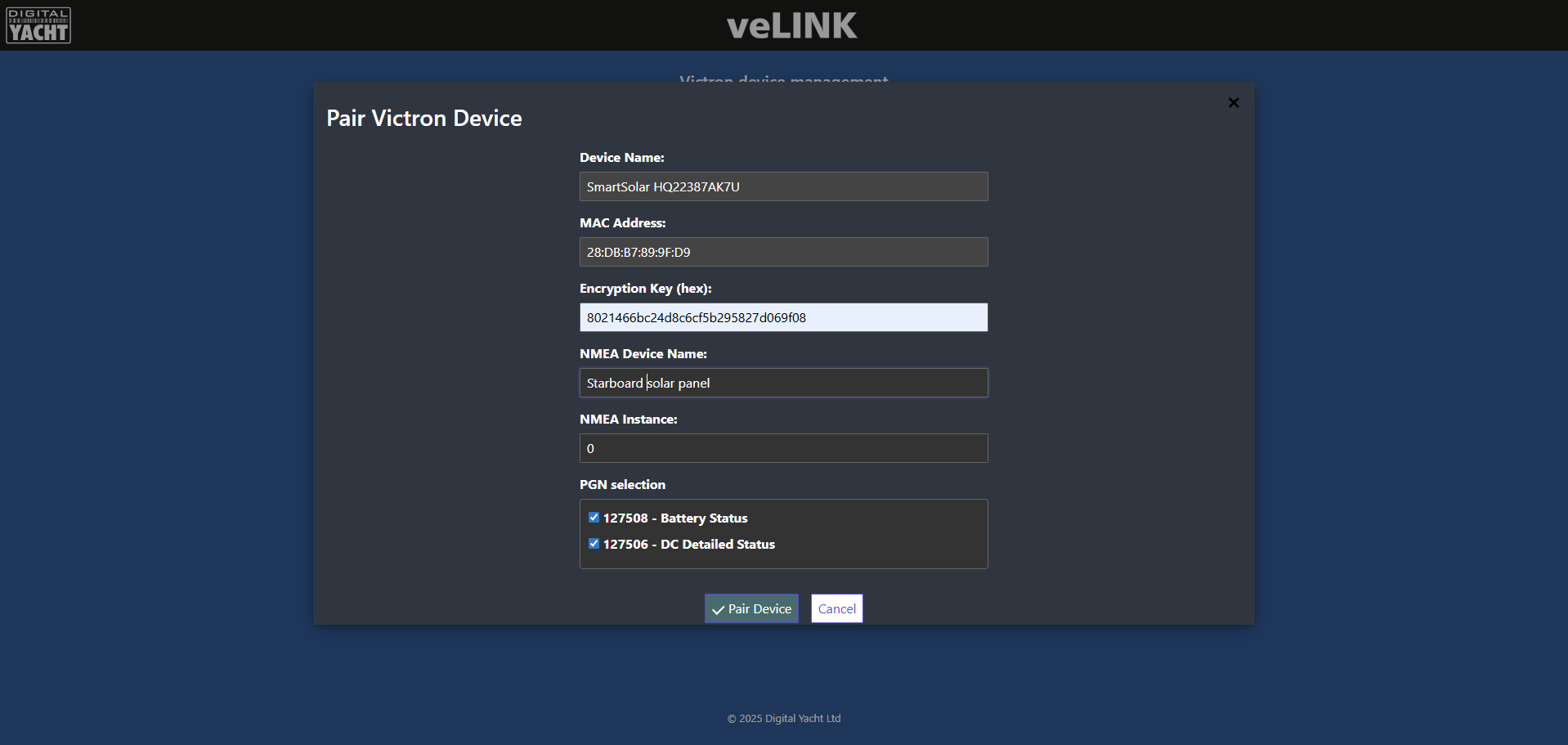
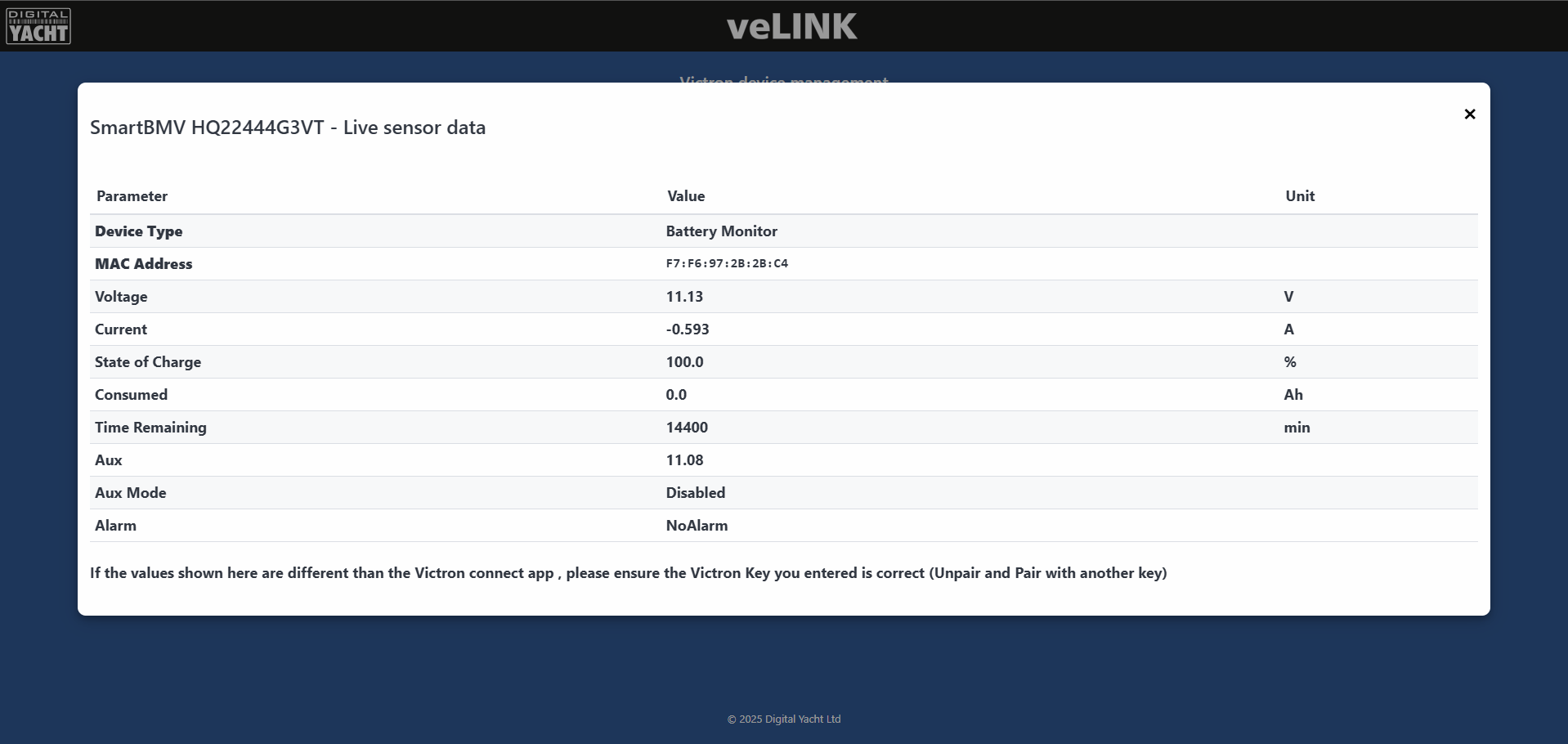
Once connected to NMEA 2000, veLINK provides a web interface to make connections to Victron devices, name them, and monitor status. I am pleased to see a detailed view of the data provided by the device and the ability to easily rename connected devices.
I have had a mixed bag of success with Victron’s own NMEA 2000 adapter for a GX device. It generally works to get devices on the N2K network but I’ve found instancing frustrating and fiddly to configure. It appears veLINK makes those tasks much simpler.
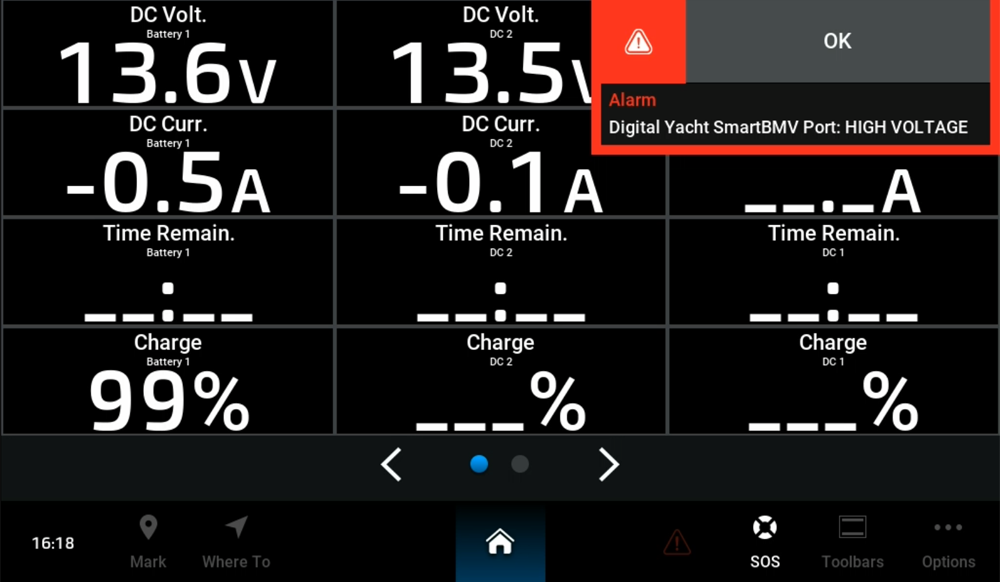
Digital Yacht is a leader in embracing NMEA 2000 alerts and the veLINK is no exception. They make good use of the alert PGNs to carry alerts through from the Victron device to NMEA 2000. Also, the device will generate an alert if a paired Victron device is not detected for more than 30 seconds.
The veLINK isn’t a fit for everyone. I fully expect one of the first comments on this article to note that a GX device is a better bargain. There is no doubt the Cerbo and other GX devices offer remarkable value. However, I see veLINK filling a hole in the options and doing so at a fair price. I am excited to get my hands on one and try it out.





This may be an excellent solution for those of us with hybrid, primarily Bluetooth networked setups:
eg Victron Shunt , Epoch LFP house bank, Orion XS DC chargers, IP-22 AC chargers, Victron MPPT Solar chargers Magnum Inverter charger.
I’ve considered getting a Cerbo GX to integrate these devices but it doesn’t seem to interface well via Bluetooth.
Thanks for drawing this Digital Yacht solution to our attention.
-evan
I’m well invested in Victron, but still can’t see the value of a Cerbo. It’s lot’s of great tech, and all the cool kids have one, but it doesn’t actually DO anything worth the money. And my 4 MPPT and my Multi make a messy (and expensive) array of wires to get it to work. As you point out, my Battery Protect isn’t even allowed to play. I use, and am very happy, with the Victron App — when I care enough to look to more than BMS and manual controls.
But, I’ve always thought that if my phone has all the data over BT, that a Cerbo has over wires, why can’t the app DO what the Cerbo does — present all that data in a consolidated fashion and even allow control (ie, want to change all your Absorption values at once, do it here — although admittedly one-time setup is not a compelling use-case). It looks like the veLINK tries to fill that gap.
Still not a good bang for the buck, for me. But that doesn’t mean there isn’t a place for it for others. And no mess of wires to run!
Looking at this device more closely, it seems that all it will do is display the current status of the various BLE devices in the network over NMEA 2000 but does not allow any control or modification of the device settings.
If this is true, then it’s not really a complete solution to getting Cerbo-like integration with all of the BLE devices on board.
Disappointing…
Evan,
I think your interpretation of the capabilities is correct. This is a means to aggregate display of data, not control. But, to me that isn’t such a disappointing capability. If I need to control Victron devices, I’ll take out my phone and use Victron Connect. I imagine you have a use case in mind that this would have improved, I’d be curious to hear about it.
-Ben S.
OK, here is my situation:
2006 Nordic Tug 37
I have a 12V system with 2 x Epoch V1 460 Ah house batteries in parallel for ~ 960 Ah (they each have ~ 480 Ah true capacity)
Victron BMV 700 shunt,
IP22 30A AC chargers x 4
Magnum 3000 Inverter charger capable of 132A AC charging
910W solar panels with a Victron MPPT 100/50 controller
Victron Orion XS-50 chargers x 2 running off a 260A alternator
I am overseeing this system manually with the Victron Connect app to coordinate the assorted Victron chargers via BT; but, with the V1 Epoch batteries and the Magnum charger in the mix, DVCC is not really an option. When on generator, I will usually decide to shut off charging once we are at an acceptable SOC (e.g. ~98%).
I have looked into Node Red and to see if a CerboGX might enhance the overall integration of these components but the fact that most of my Victron devices are networked via BT suggests that the Cerbo might not be that helpful.
So, in my use case, there may not be much advantage to either this VE.connect or a Cerbo GX?