

Cay Electronics to showcase CayCube onboard power alternative at PBIBS 2026
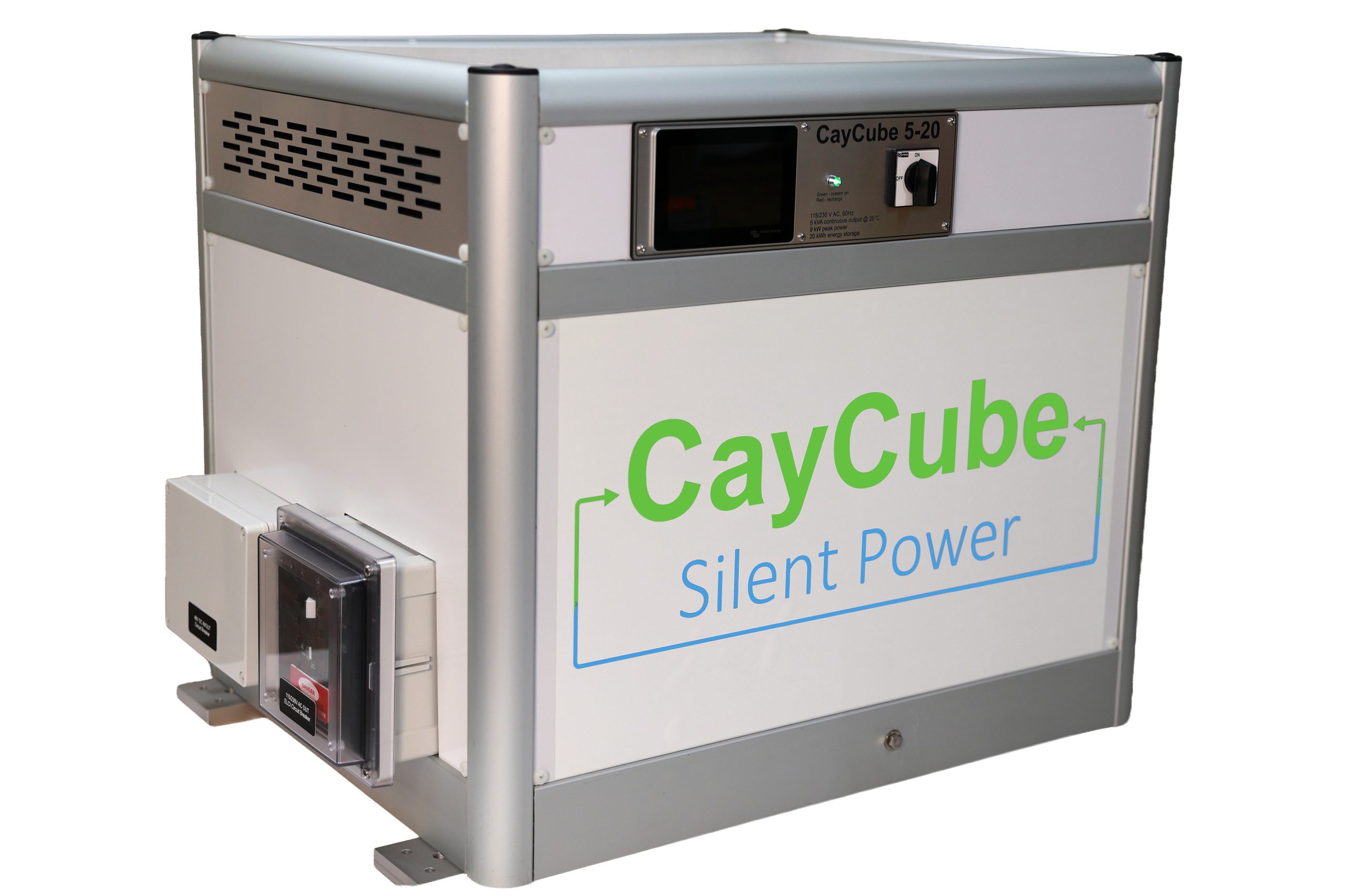
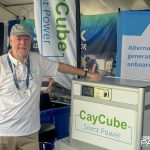
PORTSMOUTH, RI – March 12, 2026. After a successful pre-launch marked by the prestigious Newport Boat Show Innovation Award last fall, Cay Electronics will be showcasing the cutting-edge CayCube technology at Palm Beach International Boat Show from March 25 to 29.
CayCube is the culmination of 40 years of maritime experience resulting in a revolutionary alternative to standard generators on board.
This solid-state, silent running system provides today’s demanding boaters with the fume free, fire-safe power needed to replicate home comforts — from air conditioning and freezers to microwaves, battery chargers and personal devices — without the noise, vibration or carbon emissions of a standard generator.
Other key features of CayCube are the absence of moving parts, and installation requiring no costly plumbing or exhaust fittings. The compact device is entirely maintenance-free and remarkably easy to install and integrate into your vessel.
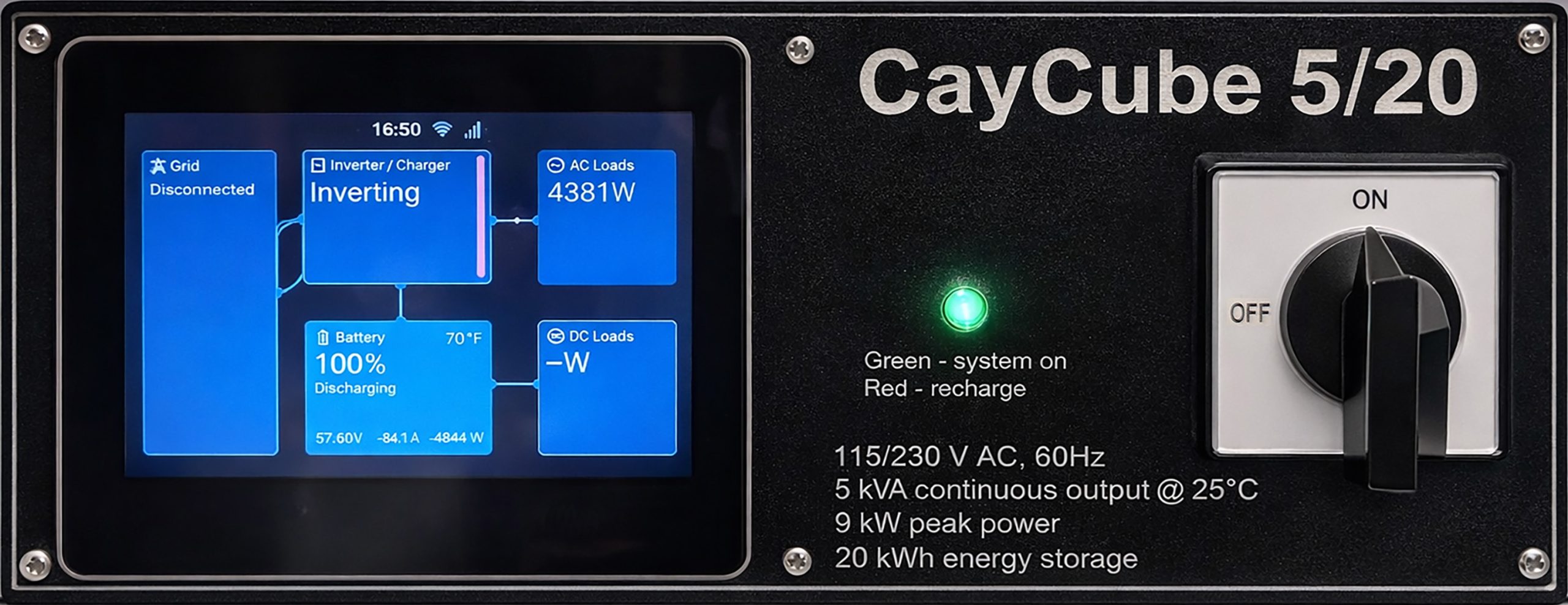
CayCube provides for an extended runtime with 48 hours or more of support for air conditioning, appliances and essential equipment such as battery chargers or stabilizers.
Recharging options include shore power or generator. A hybrid option is available that adds a dedicated alternator to the propulsion motor for fast recharging and limitless runtime. For those seeking 100% sustainability on board with zero carbon emissions, it can be recharged using solar or wind power.
“We are thrilled to introduce CayCube to the market,” said Rufus Van Gruisen, president of Cay Electronics. “This product underscores our commitment to providing a sustainable, effective innovation to shipyards, installers and boaters alike, while setting a new standard in onboard comfort. ”
Available in three high-performance models with peak power outputs of 9, 18, and 27 kW, CayCube offers the ultimate peace of mind for life on the water.
Visit us at Booth #305 in the Evernia tent at PBIBS 2026, in Downtown West Palm Beach from March 25 to 29 to see this new technology in person.
For information online, visit www.caycube.com
Related Posts:

Panbo publishes select press releases as a service to readers and the marine electronics industry. The release contents do not reflect the opinion of the editors and are not fact checked by the editors


The CayCube starts at $28,995 for the 5/20 model shown, but it looks very well designed to me, and it uses premium Victron and Blue Sea components along with 48v Solid State Marine batteries. In this video you can meet the brains behind the Cube and see what’s inside:
https://youtu.be/OtjVUPg2uds?si=548H0mw0Hg4OzGXF
Interesting, but it seems like you could put together a lithium based system with comparable output for 5 – 10k (not including labor of course). I’m always astounded by the packaging premium.
Bob, a pair of 48V 10,584Wh Solid State Marine batteries cost $15,000, and the company claims several advantages over conventional lithium boat batteries:
https://solidstatemarine.com/collections/48-v
That said, I wouldn’t call this a system for frugal DIY boaters like me (and maybe you), but a major plus for this all-in-one package is that a deeply experienced marine electronics company put together all the pieces so that the boat owner does not need to know about the complexities of lithium battery installs.
Ben
Is Rufus going to loan you one to run through the Panbo shop?
The problem with “generator alternatives” that are based on batteries is batteries are not an energy source, but an energy storage device — you have to pay the piper, and fairly soon. A boat with a 5kW generator (fairly common, even if generally too large) can run their A/C for weeks nonstop, without shore power. A boat with this device can possibly run their A/C for a day or two (possibly), and then they are done unless they go to a marina (or run their generator…..). A huge 2kW alternator would take 10 hours of engine runtime to recharge this. A huge 2kW solar array would take 3 days to recharge it (assuming you aren’t also using more than your solar array produces!). They work in certain use-cases, but those are rather limited. And like EP, converting a boat that was autonomous with a generator to a device like this rules out so many potential buyers that it would have a significant negative impact on vessel value. Prime use-case is a weekend cruiser, or those that do marinas only, never anchoring.
Cruising power boats (trawlers, etc) that motor for many hours a day might find this very useful. Since they can easily get 5 hours of engine runtime a day, a 2kW alternator would allow them to get a 50% recharge per day (discounting any energy use while traveling). But even cruising power boats anchor for a couple days at a destination — and then have to solve the recharge problem.
You make many good points, Harry, but I will point out that CayCube offers a “Hybrid option” that adds an 8kW alternator/regulator combo for $3,495
Harry, very true that the CayCube is a converter of energy not a generator of it. I like to point out, only partly tongue in cheek, that neither is a diesel generator. It is only converting the chemical energy stored in diesel into electricity. Once the tank is empty it has to be refilled, just like a battery. Of course, the difference is that the ‘tank’ in the CayCube models is only equivalent to two to six gallons of diesel, (more like a day-tank). But the CayCube can be refilled without a visit to the fuel dock, from the primary engine, shore power, solar, or wind.
Hi Charlie!
The Panbo Ben with the serious battery testing shop is going to the Palm Beach Show, but I don’t know if there are CayCube testing plans.
Meanwhile, I’m very happy with Gizmo’s all Victron lithium system circa 2021. There have been no problems with almost continuous use and the system keeps getting better.
The latest v3.70 GX update even let me name what the Cerbo relays do (and a whole lot more). And I predict that Rufus made maximum use of the Cerbo in the CayCube.
@Harry Keith
All absolutely and glaringly correct but… there is always a but…in a larger boat (50+ feet) with an installed genset, this would be a very nice, albeit expensive, addition to allow operation through the quite time.
On the non-recreational boating front, it would also be an excellent choice for emergency services support. Cubes could be landed to provide immediate, but limited, power to a facility until generators with their supporting fuel storage and replenishment sub-systems could be landed at the site to take over the long term demands. I am thinking of a hurricane or tornado knocking out power.
@Ben E.
Hey Ben!
Glad to hear that the Victron gear keeps operating as designed. I am glad to be associated with Victron as their equipment is the most solid and feature rich in the market place.
Venus v3.70 is awesome! The biggest improvement from my POV is that individual cell voltages are now available so the interested owner can now monitor VPC to ensure that there is no VPC drift and that all the cells are balanced.
Right, unfortunately that new Cerbo feature apparently does not apply to my Victron Lithium Smart batteries, but I’ve always been able to see all the cell voltages via the Victron Connect app and they always look very well balanced.
hate to be that person. but we should say semi-solid state. solid state is the mythical holy grail “unless your donut labs” battery tech. safiery/solid state marine do still use liquid just in a massively reduced way. still impressive. but false advertising in a way,
still i feel the near term future is big alternators and safe higher voltage battery. im sure we will see 700-800v architecture in boats soon “there is an australian couple building a hybrid power cat running 700v blade batteries interestingly.
A while ago there was a company called Watt, located in Pennsylvania, who was going to bring out a Fuel Cell. Their web site is here (https://wattfuelcell.com/about-us/).
I would bug them occasionally to see if they were getting any closer to a commercial product and the last time I did they told me they were selling their product through the electric company.
Checking the site today it would seem that they have a Watt Remote product that could be used on a boat that seems it could use an LP tank.
Ben, can you identify the pros & cons of the Cay, Watt systems and the pros & cons of a fuel cell and what Cay is, if it isn’t a fuel cell.
Thanks.
@Charles Williamson: Ben is probably at the PBIBS so I will take a stab at a partial answer. I am a Victron Distributor so I have some experience with the Blue Boxes.
The Cube is not a fuel cell. It is a self contained energy conversion system that can produce power until the batteries are depleted and the batteries are then recharged when qualified AC is available.
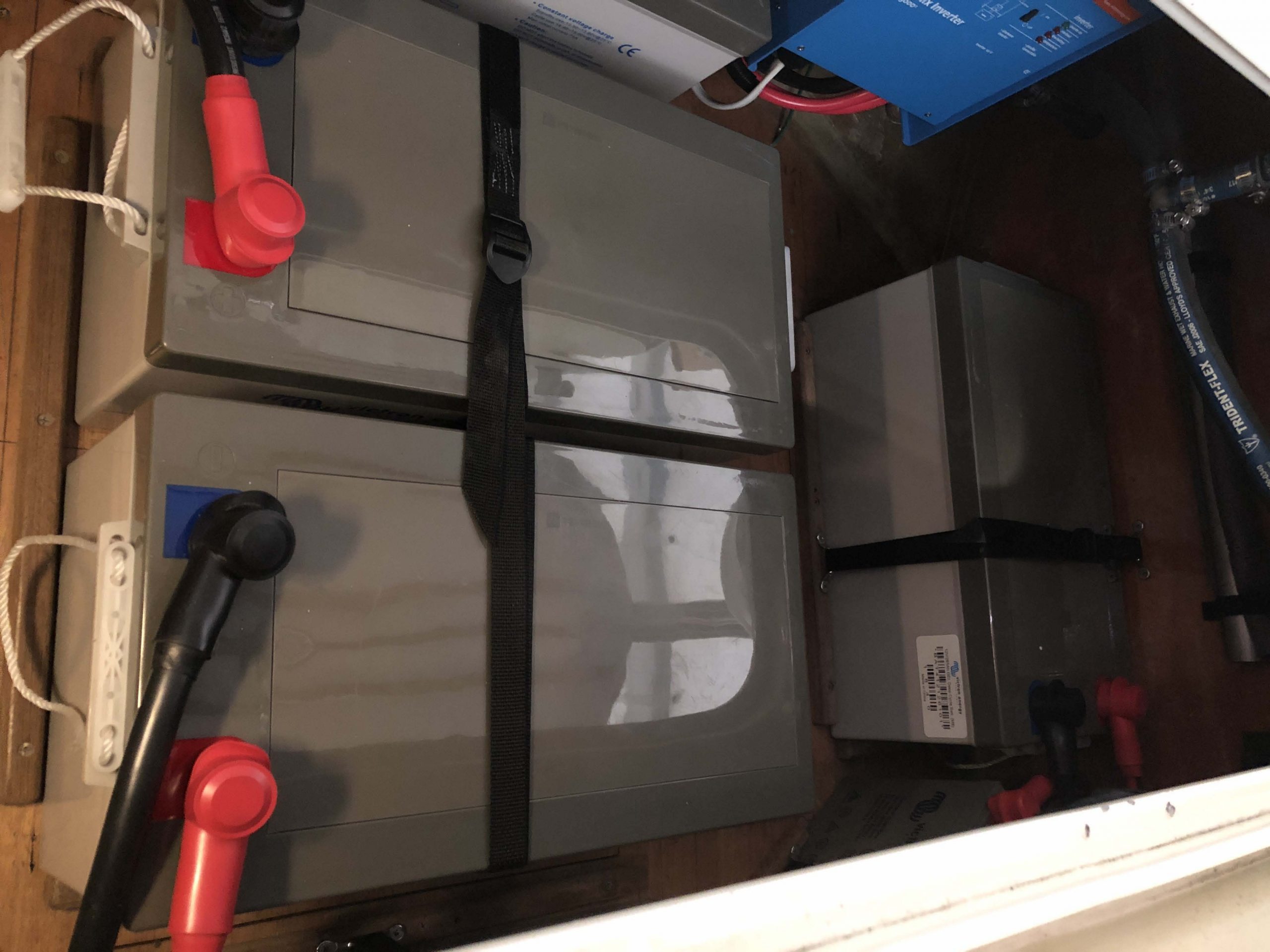
Storage: Solid State Marine’s solid state 48VDC batteries.
Conversion: Victron 48VDC MultiPlus II that converts 48VDC to 230VAC single phase
Transformation: Victron Auto Xfmr. 230VAC single phase input > 120VAC/240VAC split phase output
Charging: Qualified AC input power to Victron 48VDC MultiPlus II; outputs 48VDC to recharge the onboard SS LFP batteries.
Transformation: Victron Orion TR Smart DC/DC converter; 48VDC input/12VDC output
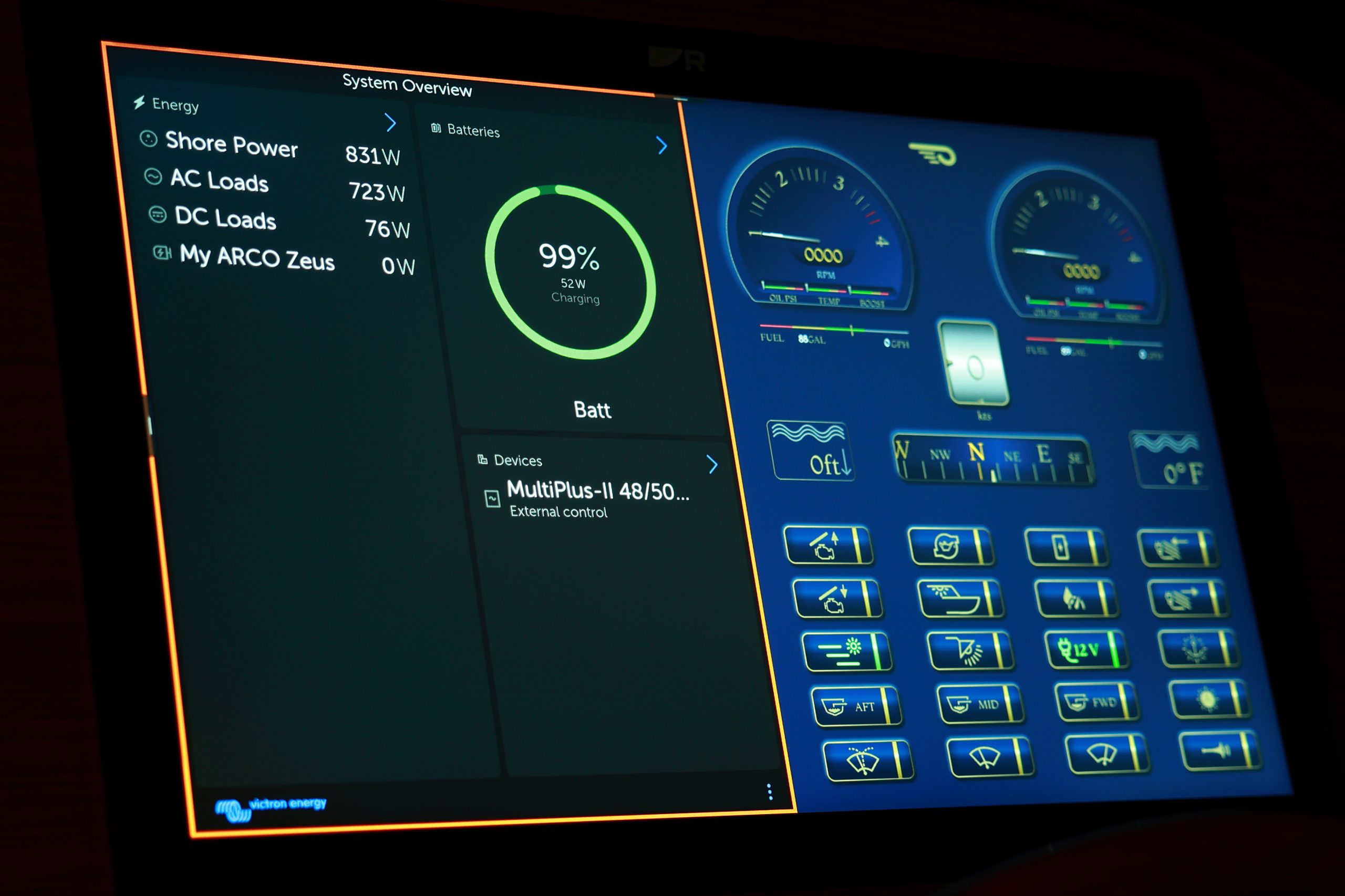
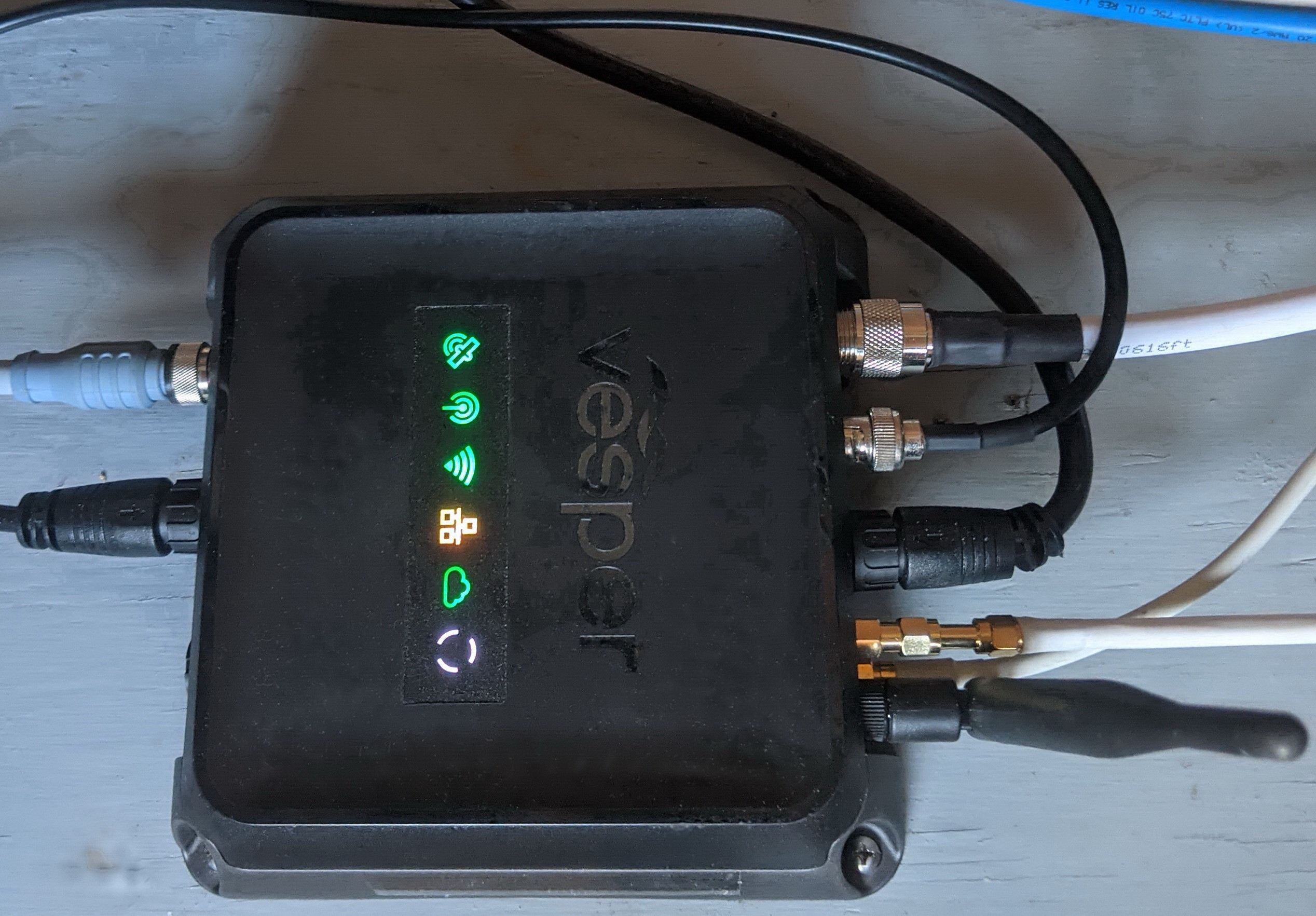
Monitoring and Control: Victron CerboGX monitors system and can be viewed remotely via the free Victron Remote Monitoring system. Accessed by the Touch 50/70 touch screen.
I just published an introduction article on the CayCube with a video from co-creator Rufus Van Gruisen and some more detail.
-Ben S.